
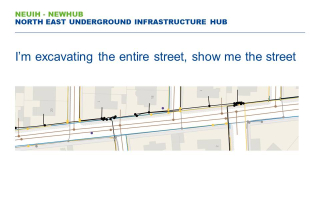
Every construction project devotes significant efforts to locating underground utilities prior to and during construction. But this information is rarely shared and the location of underground infrastructure is recaptured over and over again. To begin to address this problem, the Geospatial Commission, part of the U.K. Government Cabinet Office, has begun the process of creating a national Underground Assets Register which will show where electricity and telecom cables, and gas and water pipes are buried.
In the U.K. damage to underground pipes and cables during construction excavation is not only a risk to the public and workers but according to the Geospatial Commission is estimated to cost the UK economy £1.2 billion every year.
To begin to address this problem a pilot has recently gone live in Sunderland (Newcastle on Tyne) in North East England that includes almost full water, gas, electricity and a great deal of telco data. North East Underground Infrastructure Hub (NEUIH) is the overall initiative name for OS’s and Northumbrian Water’s underground work in the North East of England. The first phase of this project was a ‘Common Infrastructure Map’ covering a few small sample areas around Newcastle. This combined map is the first step towards creating the NEUIH. The current phase of the OS initiative is called ‘Sunderland sand box’ and implements a dataset that contains almost full water, gas, electricity and a great deal of telco data for the city of Sunderland.
To develop a national map of underground utility infrastructure for the U.K. the Geospatial Commission has just announced its intention to create an Underground Assets Register. The register will show where electricity and telecom cables, and gas and water pipes are buried and is intended to prevent both accidents and disruption to the economy. The project will start with £3.9 million pilot projects split between London and the North East.
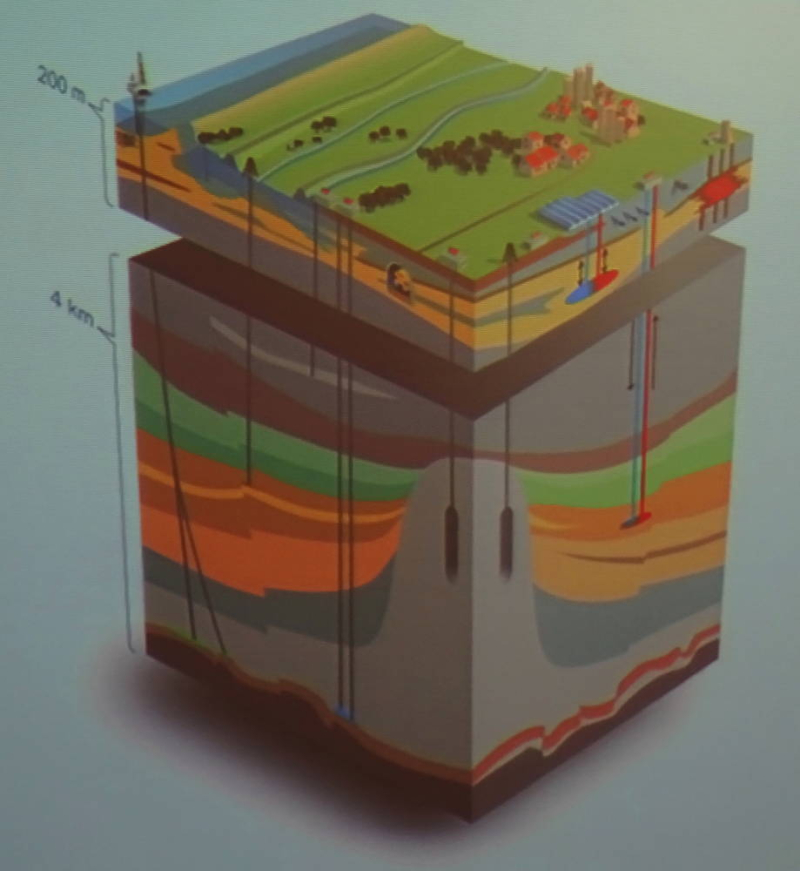 I blogged previously about a related development in the Netherlands. Legislation passed in 2015 by the States General in the Netherlands created a Basisregistratie Ondergrond (BRO) or Key Registry for the Subsurface. The law mandates that if you excavate or drill you have to share your geotechnical data with the registry. In addition if when using the data in the registry you find something is incorrect you are required to report it.
The Key Registry for the Subsurface (BRO) came into force in January, 2018. The BRO registry forms part of the System of Basic Registrations of the Netherlands which includes location and other data on addresses, buildings, topography and cadastral data. The BRO registry consists of 26 data types, which will become mandatory in installments over five years and all of which include location. On 1 January 2018,it become mandatory to report the first three data types, geotechnical surveys (CPT), groundwater monitoring wells and soil drilling sample profiles. On 26 June 2018, this data became publicly available via the Dutch open data portal PDOK. Work is underway to implement data models for the remaining data types including geotechnics, soils, and groundwater. All 26 will become mandatory by 2022. Man made underground infrastructure, apart from mining, is not part of the BRO.

Be the first to comment