
In 1982 a not-for-profit organization AM/FM International was chartered to provide the growing AM/FM industry with an educational forum to exchange ideas and keep up with changing technologies including the change from paper to digital mapping, called Automated Mapping/Facilities Management at the time. In 1998, AM/FM International changed its name to the
Geospatial Information & Technology Association (GITA). Since then GITA’s mission has been to provide education and information exchange on the use and benefits of geospatial information and technology for the world’s infrastructure, particularly in utility organizations including electric power, water and waste water and gas.
In this time of rapid technology change in the utility industry, driven again by the renewed penetration of digital technologies into all aspects of utility operations, the need for an organization like GITA to monitor new technologies and provide education and an open forum for the exchange of ideas is greater than ever.
But with current limited travel budgets at many utilities, regional conferences are attracting more participants than national events. GITA has about 15 chapters in North America, and one of the most active is the Pacific Northwest Chapter (GITA PNW), which just held its annual conference. I have been attending this event for at least five years. This year’s event was again very worthwhile and included a number of presentations on new IT technologies and their application to the utility sector, several of which I have blogged about.
Green construction and the convergence of model-based design and geospatial
Modern web portals for utilities – asynchronously updatable mashups and standards-based
A cloud-based hosted solution for small utilities
Reflections on GITA’s role in technology change in the utility industry by the President of GITA PNW
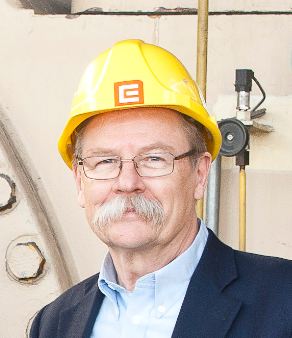
The event was opened by the President of GITA PNW, Zan Strausz. He reflected on the origins of GITA and why he thinks that the needs that drove the formation of AM/FM International and GITA are just as important today as they were in the 1980’s and 1990’s. I found his talk every perceptive and relevant to anyone contemplating the massive technology changes that the utility industry is just beginning to embark on, and I have included some of his remarks here.
Before we launch into our
program I want to
take this opportunity to reflect on the venerable tradition you as conference attendees
are a part of. I’m
speaking of the long history of GITA providing a forum for education, promotion and
innovation in the
geospatial world. Its roots in the utility industry reflect the early adoption of
geospatial technology
going back 50 years. With the development of what was then known as Automated
Mapping/Facilities
Management, or AM/FM, utilities were pioneers in applying geospatial concepts
to analysis and
asset management, way before the term Geographic Information System became the
ubiquitous
concept it is today. It was around this technology that GITA, originally called AM/FM
International,
was organized. Over the years the focus of the organization has expanded
beyond just the
utility industry to include a more broad base of infrastructure users and
service providers
involved in the application of geospatial technology. But the core purpose of the
organization remains to
provide a forum for the dissemination and sharing of geospatial technology
concepts as they relate
to increasing the efficiency and value of the services our organizations provide.
I would like to provide one
example of an
issue that I have observed in my own industry which I believe can be mitigated by
benefits of the
forum provided by GITA. I refer to what I would term “technology inertia” by which
I mean
the cumulative effect of bureaucratic momentum and ingrained habits that prevent the
adoption of new and
particularly emerging technology. This is not necessarily a bad thing; a responsible
organization needs to
wisely and considerately adapt to new technology, as steward of their investors’
or customers’
interests. However, it becomes a problem when it delays the application of technology
that can definitely
improve the efficiency of the organization. It is ironic that this problem would appear in
the utility
industry, which has a history of innovation in the application
of geospatial
technology … I’m certainly sympathetic with the
conservative ethos of not
changing with every shift in the winds of technology, and if something works, why
change? But,
often, this can retard innovation which would benefit everyone.
Forums such as GITA
provides can be
an antidote to this ossified conservatism by giving us insights into emerging and
successfully
applied geospatial technology, provided by our peers and industry experts; insights
that we need to
advance our enterprises into the future. That future holds some
immediate challenges to
the utility industry in particular. The many technologies embodied in the
concept of the
Smart Grid are going to need to be implemented in the very near future if we are to
meet the huge
challenges of providing power, water and other basic infrastructure in a world
whose exploding
demand is rapidly running up against the realities and imperatives imposed by the
finite nature of
the resources of our increasingly small world. Geospatial technology will certainly
play a key role in
the management of the huge amounts of data processing and analysis that will need
to be applied to
provide any hope that we can we can solve the infrastructure challenges
that absolutely must
be met before we can leave future generations the legacy of a clean, prosperous and
healthy world.
Be the first to comment