
Last week I had the opportunity to present at the annual Hexagon conference HxGN Live in Anaheim. Hexagon is a rapidly growing company with broad technology reach with core strengths in geospatial surveying and laser scanning technology (Leica Geosystems), UAVs, software GIS systems for network engineering, network operations, and operations and maintenance of utilities (Intergraph), design and operation of nuclear power plants (Integraph) and enterprise management of large scale construction projects among other technologies and solutions.
Underground utility mapping
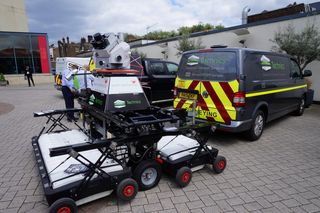 Underground utility conflicts and relocations are the number one cause for project delays during road construction. In 2005 Hexagon acquired UK-based Cable Detection. Since then Leica Geosystems has offered both electromagnetic and ground penetrating radar hardware and software for detecting and mapping underground utilities. At HxGN Live this year one of the exciting technology highlights was the Pegasus: Stream, which combines a Leica Pegasus: Two mobile mapping device incorporating laser scanners, optical cameras and GNSS receivers and an IDS Stream EM ground penetrating radar (GPR) array. I first saw this towable combined above and below surface scanner at Geo Business in London. According to Stuart Woods, Leica Geosystems Vice-President of Mobile Mapping, Hexagon has worked with IDS for years and is in the process of acquiring IDS’ GeoRadar division, which developed and manufactures the Stream array among other radar technology. This advance in technology puts Hexagon in the forefront of underground utility detection and mapping.
Indoor mapping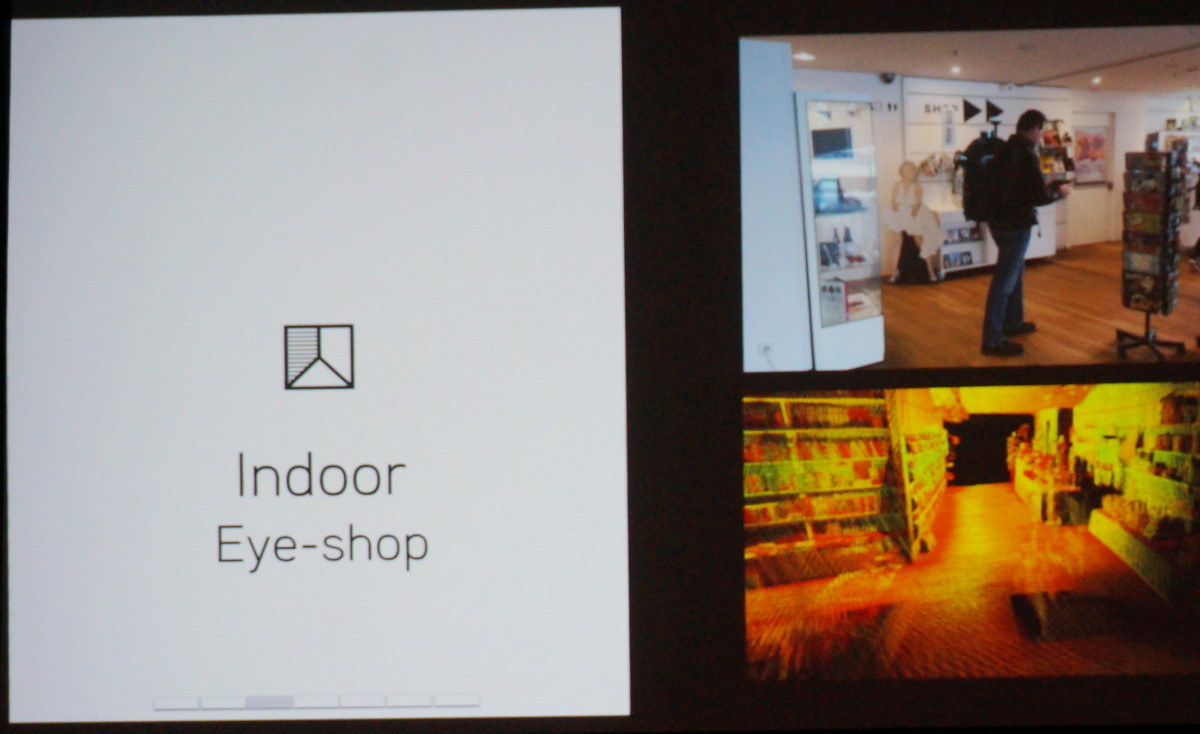

The other major hardware highlight of this year’s HxGN LIve was the Pegasus Backpack. This is a wearable reality capture platform that collects data indoors, outdoors and underground. Klaas de Weerd, COO of Prisma Van Steenis, Prisma Groep, 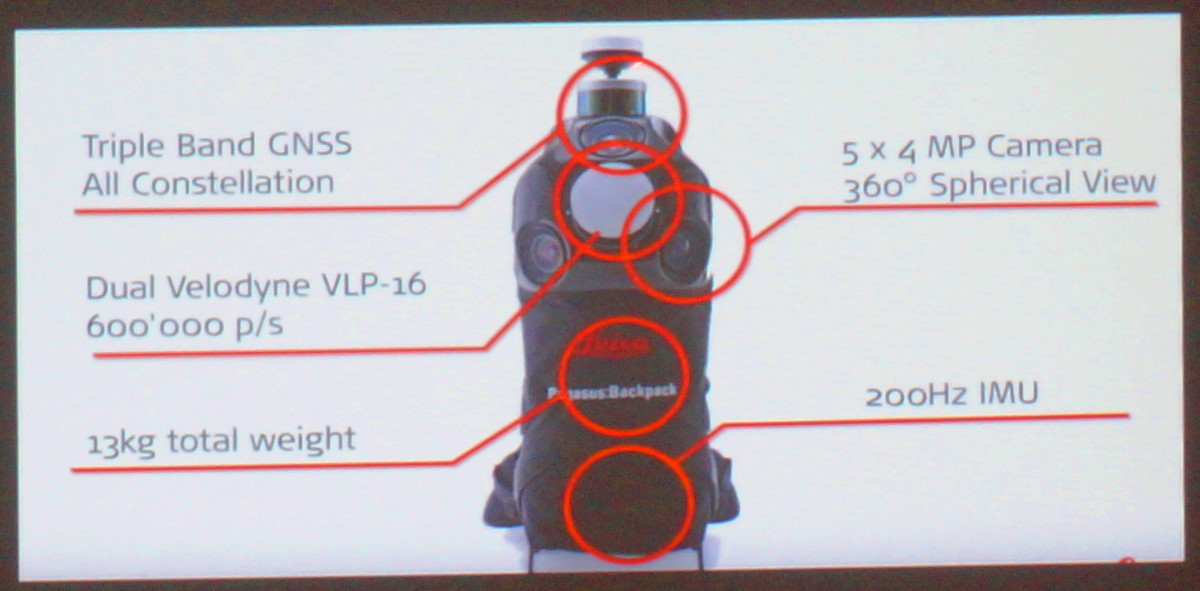 reported the experience that his team in mapping structures in the Netherlands. Among other structures they mapped the Eye Film Institute in Amsterdam inside and out. Leica mobile, P20 and P40 scanners were used outside, and the Backpack was used inside and on the roof.
 Slope instability detection and monitoring
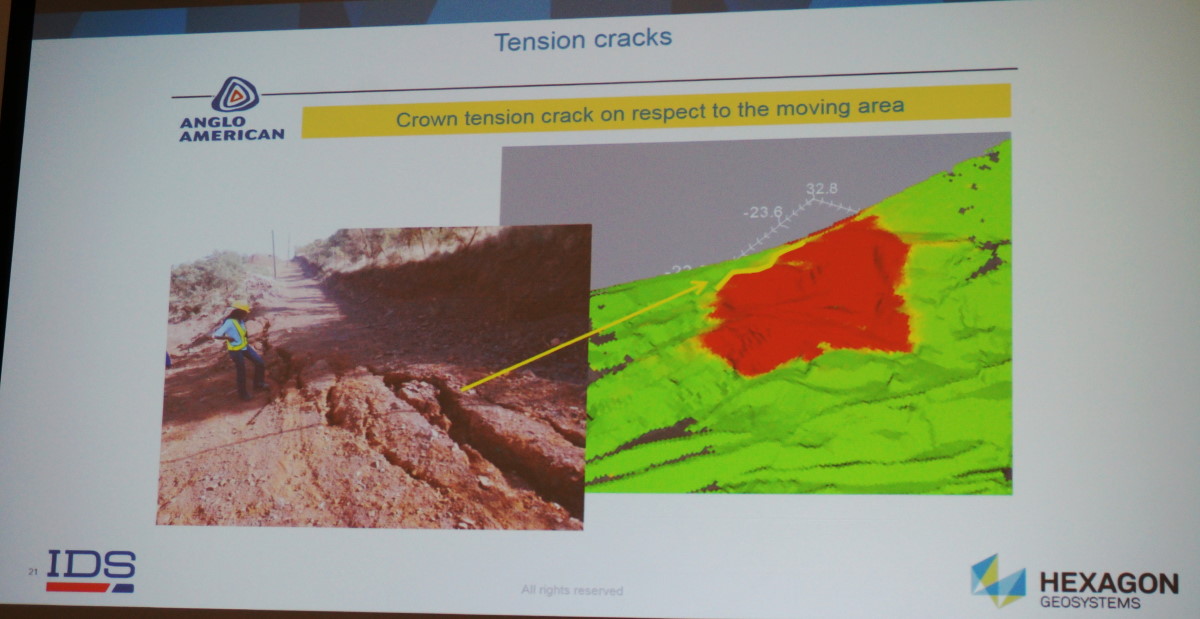
Enrico Boi, of the Georadar Division of IDS, reported on several applications using interferometric radar to detect slope deformation. Slope failures are complicated and hard to predict, which is the reason radar is important. 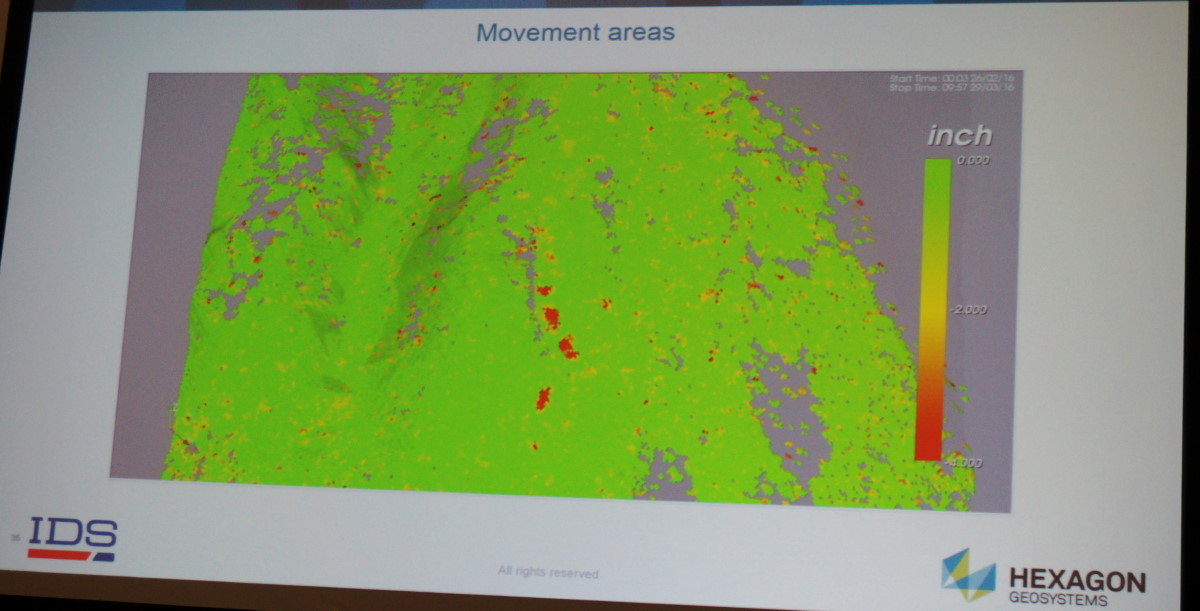 For example, the I-70 through the Rockies is subject to rockfalls especially in the Glenwood Canyon in Colorado. IDS Interferometric Radar (IBIS) equipment was installed across the Canyon to identify the location of slope instabilities which then could then be stabilized to prevent rockfalls.
Laser scanning during construction
Fokke Broersma of Arcadis NL (Arcadis is also melding geospatial and BIM in construction.) reported on how his company, which is committed to using BIM throughout the construction life cycle, uses laser scanning in conjunction with BIM. One of the projects he described was the New Rijksmuseum in Amsterdam where laser scanning was used for capturing the existing structure prior to construction, then for as-builts after construction.
In a related software product Hexagon at HxGN announced the release of HxGN Smart Build. Smart Build is a cloud-based solution for large scale construction projects that integrates BIM models, point clouds, and as-built measurements to monitor construction progress and identify deviations from plan.
Opening electric network data
Adrienne Behan of ESB, an Irish energy company, described how her company manages its 2 million wood poles. Their GIS provides multiple views into a single network model which feeds into the outage management system. It also interfaces to other critical business systems. Any changes to the network are available to business users of the system within 24 hours. This is remarkable among utilities where backlogs often result in the network model being months even years out of date.
 Mobile sensor platform robot
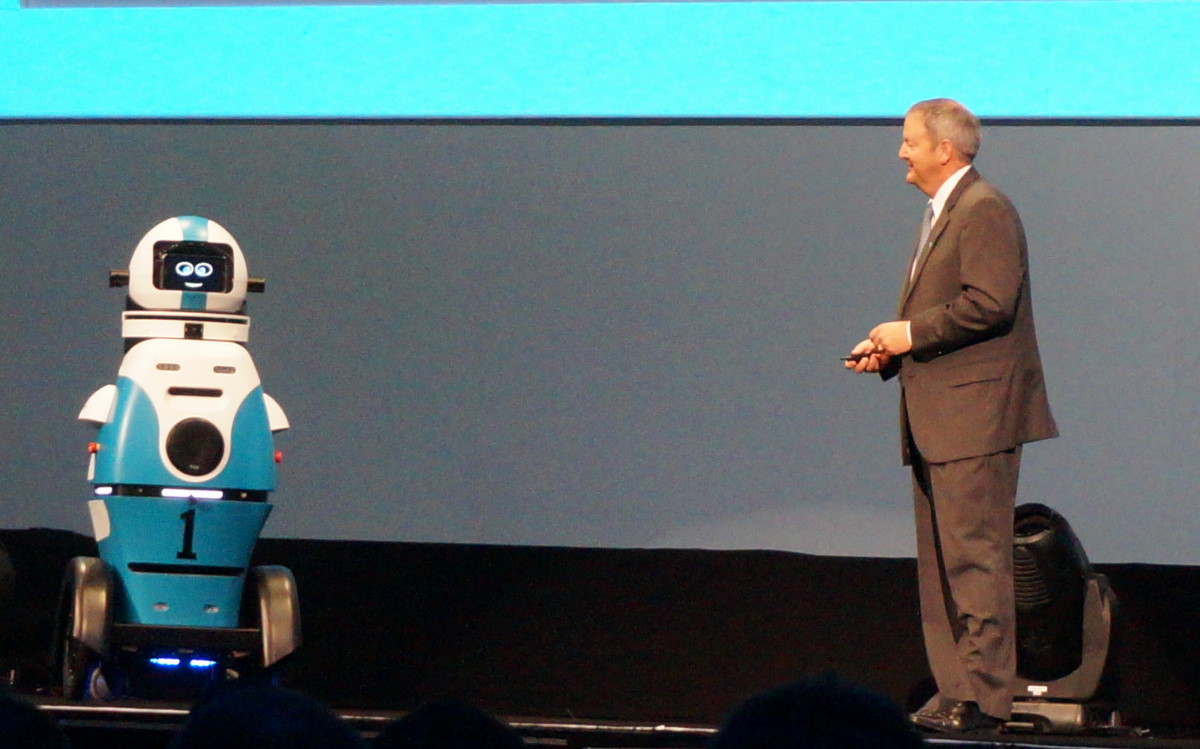
A highlight of President of Hexagon Safety and Infrastructure Steve Cost’s keynote was a product of Hexagon SI’s partnership with Gamma 2 Robotics. The robot that came on stage is a mobile sensor platform. One application of the product is a security patrol robot branded RAMSEE which can patrol autonomously providing real-time data on intruders, motion, heat, fire, smoke, gas and more.
UAVs
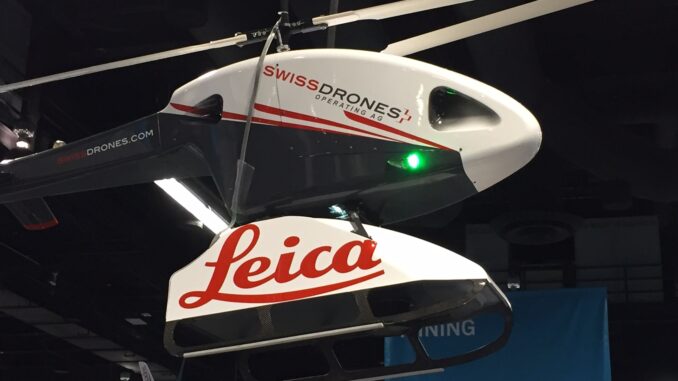
There were several UAVs on display at HxGN. The one I blogged about several years ago, about the time tha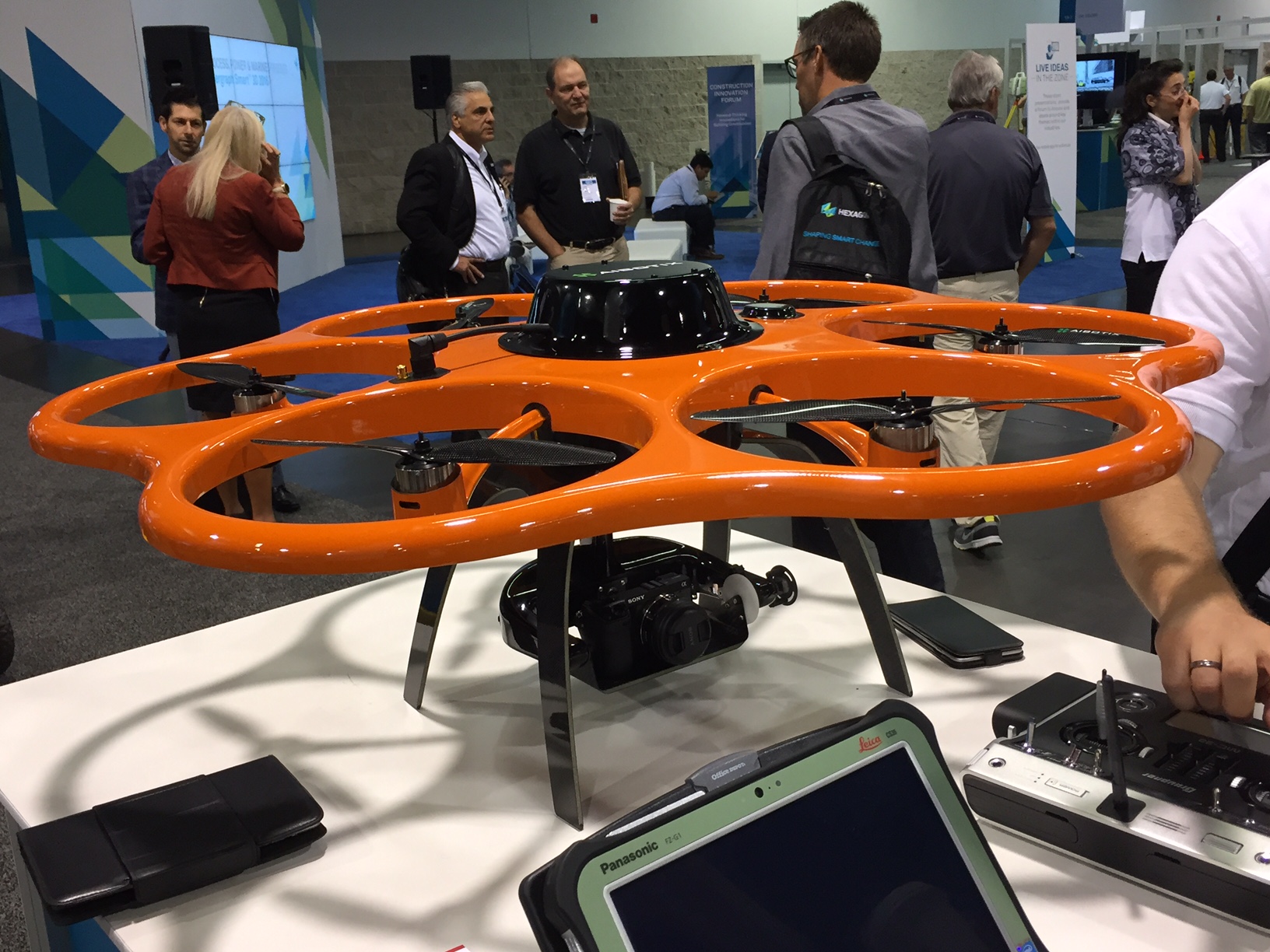 t Hexagon acquired the German company that had developed it, is the Aibotix. The Aibotix X6 has turned out to be a very stable platform capable of carrying a variety of sensors. It is used primarily for industrial inspection such as transmission pylons, dams, bridges, and other structures. It can hover, the camera or other sensor can be held below or above the frame, it can fly a path guided by GPS even in windy conditions and has fully automated takeoff and landing capabilities.
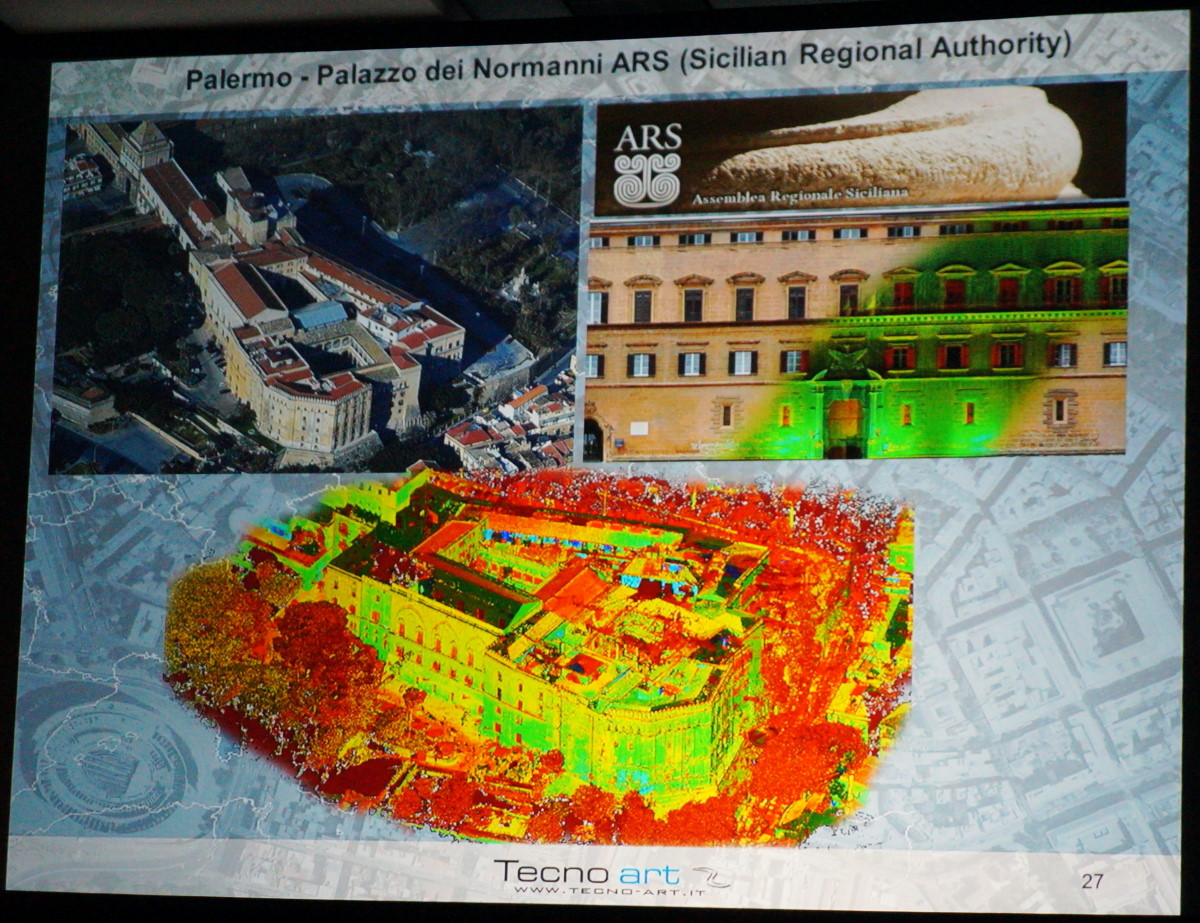 Historical building preservation Palazzo dei Normanni in Palermo
One of the outstanding examples of using scanning technology to record and preserve information about historical buildings was presented by Italian company Technoart. The Palazzo dei Normanni in Palermo, Sicily is an incredible structure with an intriguing multi-cultural history. The first building was built by the Arabs who occupied Sicily in the 9th,10th and 11th centuries. 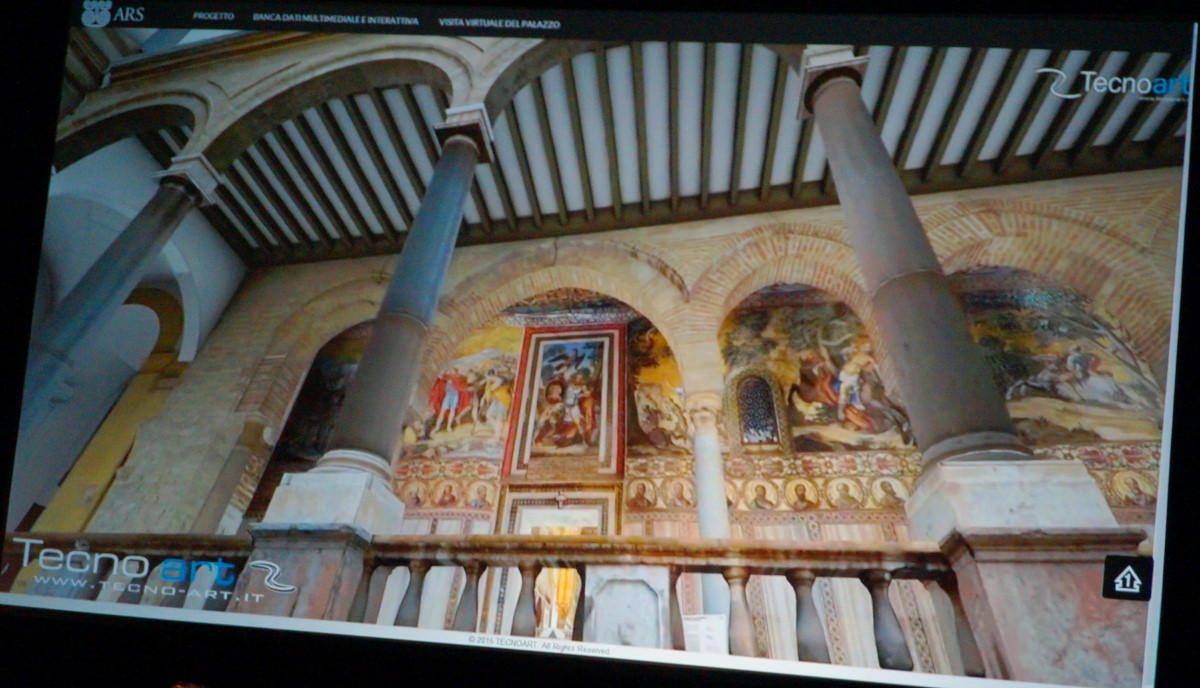 The Normans conquered Sicily in 1072 and made Palermo the capital of their kingdom. The Norman kings built upon the former Arabian palace. In 1132 Roger II, famous for sponsoring one of the earliest maps of the world based on Arab and Greek sources by Muhammad al-Idrisi (نزهة المشتاق في اختراق الآفاق,Tabula Rogeriana, Book of Roger), added the incredible Cappella Palatina. The laser and optical scan using a Pegasus One by Technoart resulted in a point cloud with optical imagery that with the aid of gaming software allows users to virtually walk through the palace and the
 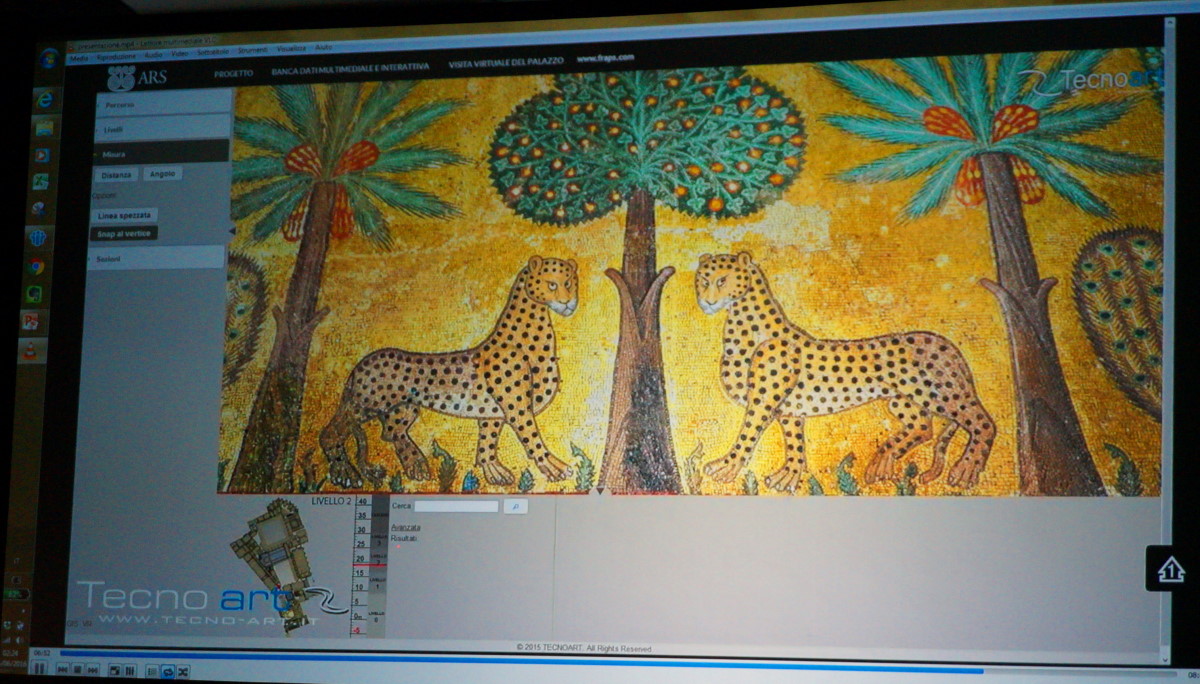 Palatine Chapel and explore the structure including the gorgeous frescos in detail.
Background
Over the past 16 years, Hexagon has evolved from an auto parts and industrial measurement (metrology) hardware provider in Sweden to an international hardware and software solutions provider with annual revenue of € 3 billion and remarkably an operating margin of 23%. It operates in the agriculture, geospatial, geosystems, manufacturing intelligence (metrology), mining, positioning intelligence, process power and marine, and safety and infrastructure sectors. Among the many acquisitions it has acquired in the last decade are widely known Leica Geosystems (was Wild), Intergraph and Erdas. It has expanded from industrial metrology to include geospatial sensors including Leica total stations and laser scanners; and software-centric enterprise geospatial solutions. Its industrial enterprise solutions include industrial metrology hardware and software targeting optimizing manufacturing processes. It has acquired software for designing, constructing and operating industrial plants and offshore facilities.
Be the first to comment