

In response to a recommendation from the Governor’s Task Force on Grid Resiliency to “scope out a Utility 2.0 pilot proposal”, the Energy Future Coalition (EFC) prepared recommendations for a smart grid pilot project that would address key business objectives including eliability and resiliency, residential customer empowerment, large customer flexibility, infrastructure upgrading, a regulatory framework for the smart grid, and a new utility business model that would keep utilities financially viable even as they delivered less electric power. 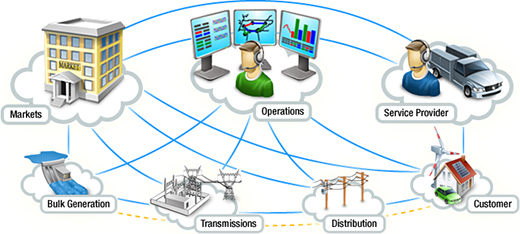 EFC’s “Utility 2.0” recommendations include
- Utility investment in an interoperable, integrated suite of smart-grid technologies, for the utility’s own system, but also on customer sites. This would include time-of-use rates, automated demand response, conservation voltage regulations and other technolgies.
- Allowing utilities to provide low-cost loans to consumers to finance new technology to be repaid by customers on their utility bills.
- Automated system sectionalizing and reclosing (self-healing networks)
- Support for micro-grids in areas where customers could safely provide their own energy during an outage.
- Utility-controlled vehicle battery charging.
Utility of the future
But the key recommendation is a proposal for a new utility business model that would decouple utility revenue from selling electric power. EFC is proposing that a set of five performance parameters measured through objective metrics would be used to vary the utility’s rate of return on equity by up to one percent above or below the current rate of return determined by the regulator. The performance parameters would be: cost, reliability, customer service, adoption of smart grid technologies and services, and support for alternate energy.
EFC is proposing that the relative weighting of these five factors would be determined by customers’ own rankings of their relative importance. This would provide utilities with a geographically detailed understanding of their customers’ priorities, and a direct incentive to serve those priorities. It would also encourage a potentially mutually beneficial utility-customer dialog.

Be the first to comment