
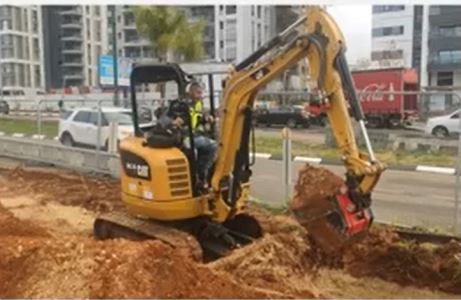
According to the Common Ground Alliance, excavation practices have been the root cause of between 30 – 50 % of annual damage incidents between 2015 and 2020. Now an innovative technology Live Dig Radar (LDR) has been developed by RodRadar which is designed to avoid damage by detecting subsurface utilities in real time during excavation is entering alpha testing of production systems with contractors and others.
Integrating GPR into excavation equipment
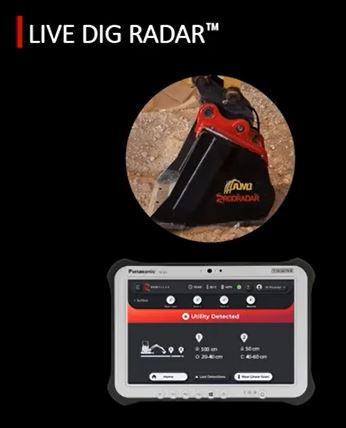 The Live Dig Radar (LDR) system integrates ruggedized Ground Penetrating Radar (GPR) antenna and electronics into a digging bucket that can be attached to excavating equipment such as backhoes. The GPR is connected to a rugged tablet installed in the operator’s cabin. Immediate visual and audible alerts are provided in real time to the operator, providing him or her with usable information, including the position and depth of subsurface utilities detected during excavation. LDR can detect any type of utility including metallic and nonmetallic pipes, cables, communication lines in plastic conduits, and ducts. LDR’s GPR is able to detect very shallow utilities, which is a known barrier for some state of the art GPRs.
How does it work ?
The process is simple; the backhoe operator sweeps the LDR bucket over the area where he intends to dig next. He gets immediate audio and visual feedback showing the location and depth of any utilities detected. If none are reported, he knows he can safely perform the next dig. Then the process is repeated until the hole or trench is completed or a subsurface utility is detected.
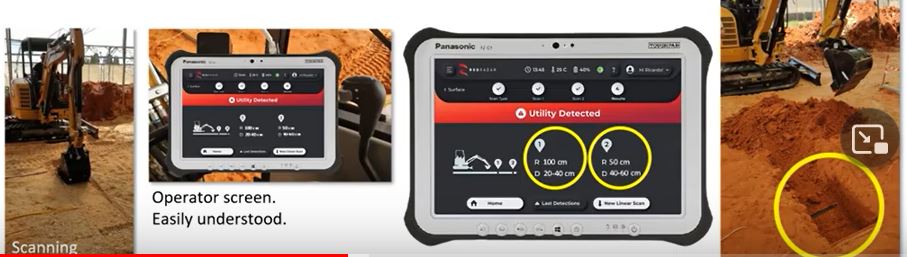 As an example, here the LDR operator screen shows that multiple utilities have been detected, two in this case, about 12 and 20 inches deep.
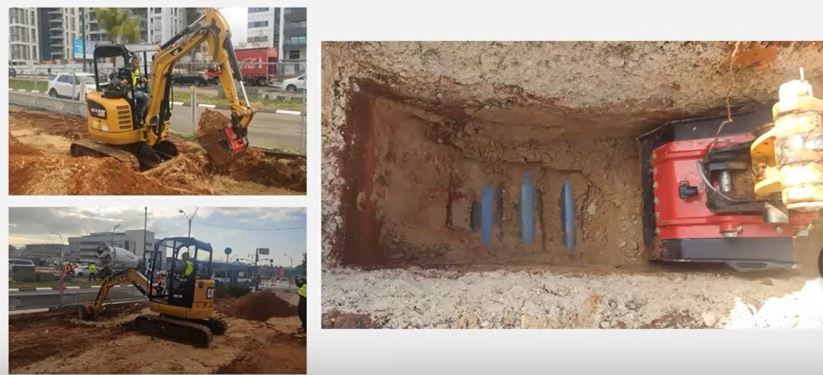 Another example shows detection of fiber optics in conduits. The LDR detected in real time shallow communication lines in plastic conduits. These lines ran across a job site in a different position from what had been marked. LDR enabled the operator to detect and map these lines and change his excavation plan.
It is well known that radar penetration is affected by soil conditions such as moist soils and clay. But with LDR since it focuses on just the next digging area, the RF signal never needs to penetrate more than a meter into the ground so that soil conditions do not represent a practical limitation on the system. Experience with the LDR unit in very harsh conditions including wet soils and clay has shown that it is able to detect, for example, fibre optic cables buried shallowly in clay.
The hardware and software of LDR have been in development over the last few years. Rod Radar has worked In cooperation with some of the biggest excavation machinery companies to ensure that the ruggedized antenna and electronics are able to endure the harsh environment of excavations. LDR is now embarking on extensive alpha testing of the first production intent systems, which will be tested by contractors, utility companies, and solution providers in North America, Europe, Australia, and Israel
Conclusion
LDR is intended to be used within existing one call (811) and other excavation processes and does not require changes to these processes. What it provides is a final level of damage prevention by enabling the excavation equipment operator in the field to detect and avoid utilities in real time while he is excavating.
This post is based on Yuval Barnea’s talk at the Subsurface Utility Mapping Strategy Forum (SUMSF).

Be the first to comment