
A survey of stakeholders in the construction industry has reported that respondents identified unreliable (inaccurate, incomplete) records as the biggest source of risk of damage to underground infrastructure. The survey elicited responses from a broad swath of the industry including excavators, local and highway authorities, and contractors. The survey found that professional surveyors are only infrequently used in locating underground assets which contributes to the poor quality of records. Furthermore, the opportunity to improve the quality of underground location data by updating records when utilities and other infrastructure is exposed during excavation is rarely taken. The reports raises a key question, What industry initiatives or regulation could give incentives for improvement of documentation quality, not limited to new assets in the ground but also include quality of legacy asset records?
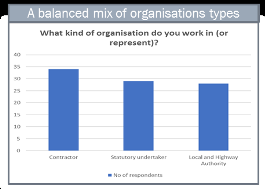
 The UK Damage Prevention Benchmarking Study survey was launched in July 2020 and was live for about a month. It was distributed to all members of Street Works UK (trade association representing utilities and their contractors on street works issues), the Joint Authorities Group UK (organizations responsible for roads and streets), and the Civil Engineering Contractors Association (the representative body for companies who build and maintain UK infrastructure). The respondents represent a balanced mix of types of organization, regions, types of utilities and organization sizes.
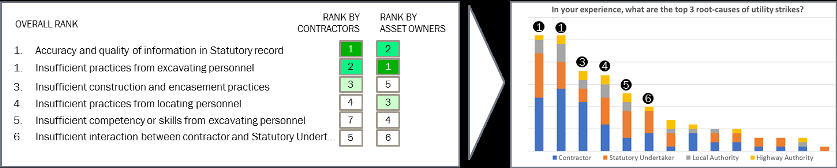
 One of the questions that respondents were asked was to select the top three from a set of 14 predefined causes of damage to underground infrastructure. Both owners and contractors identified accuracy issues of statutory records as the biggest source of risk, followed by insufficient excavating and locating practices. When asked to identify the top improvement initiatives for reducing damage, improving the accuracy of records was the top choice, with twice as many votes as the runners-ups of improvement of records availability and better safe-digging work systems.

Be the first to comment