
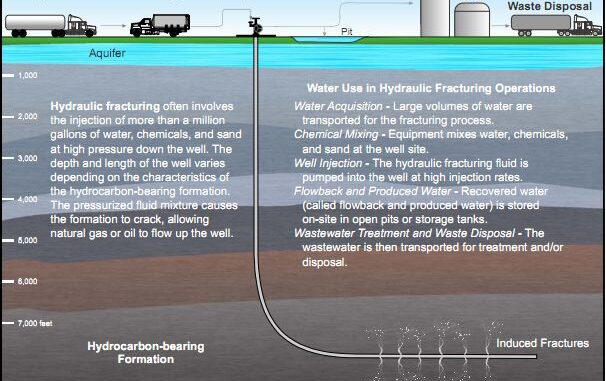
The shale-gas industry and hydraulic fracturing were explicitly exempted from Federal environmental oversight in the Energy Policy Act of 2005. I blogged about a recent EPA study in Wyoming that suggested shale-gas exploitation and specifically hydraulic fracturing (fracking) had led to contamination of groundwater. The EPA is also conducting a multi-year study of the impact of hydraulic fracturing on water quality.
At the American Association for the Advancement of Science (AAAS) meeting in Vancouver this week, it was reported that a major review of hydraulic fracturing by the University of Texas, Fact-Based Regulation for Environmental Protection in Shale Gas Development, found “no direct evidence that fracking itself has contaminated groundwater.” Researchers found
- No evidence of aquifer contamination from hydraulic fracturing chemicals
- Many reports of groundwater contamination occur in conventional oil and gas and are not unique to hydraulic fracturing.
- Methane found in water wells likely was present before the onset of shale gas operations.
- Surface spills of fracturing fluids pose greater risks to groundwater sources than hydraulic fracturing itself
But it did find that contamination of groundwater can happen when chemicals used in the fracking process escape into the water table closer to the surface from poor well-bore casings and inadequately lined storage ponds. It is reported that the analysis was not sponsored or underwritten by the natural gas industry, but covered entirely by university funds. The researchers at the 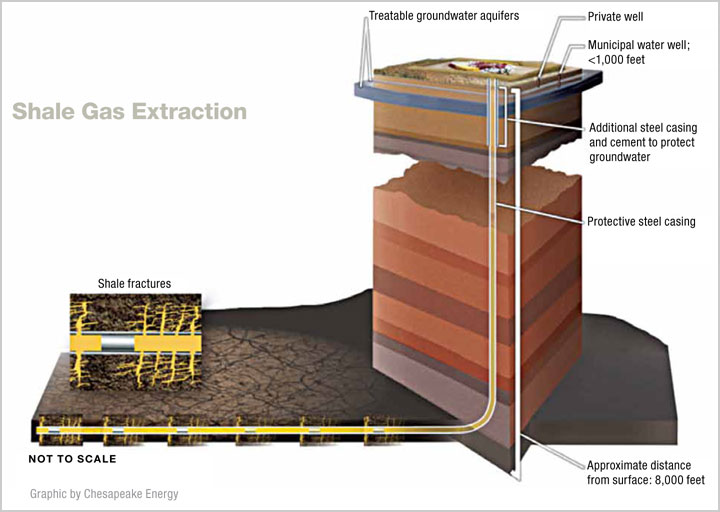 University of Texas reviewed the scientific literature and regulatory documents relating to fracking in Texas, Louisiana, Pennsylvania, and New York. They concluded that new regulations specifically for fracking are not required, but that there needs to be better enforcement of existing (mostly state) regulations of drilling in general, specifically those relating to well casing and disposal of wastewater from drilling. The report found that enforcement capacity is highly variable among the states.
- Primary regulatory authority for shale gas is at the state level
- Most state oil and gas regulations were written before shale gas development became widespread.
- Some states have revised regulations specifically for shale gas development, focusing on disclosure of hydraulic fracturing chemicals, proper casing of wells to prevent aquifer contamination, and management of wastewater from flowback and produced water
But the report further says that we don’t understand all the impacts of fracking, partially because we lack reliable baseline information, information about water quality, seismic activity, and existing leakage of methane into the atmostphere prior to shale-gas exploitation.

Be the first to comment