
Utility locating involves remote-sensing and safe excavation technologies for identifying, detecting, and labeling the underground utility infrastructure including telecommunication, storm and sanitary sewers, water, electricity distribution, natural gas, cable television, fiber optics, heating and others. An analysis by Markets and Markets has valued the U.S. market, including hardware and commercial services, at US$ 1.2 billion in 2017. It is projected that the U.S. market would grow at a rate of 5.56 % to reach US$ 1.7 billion by 2023.
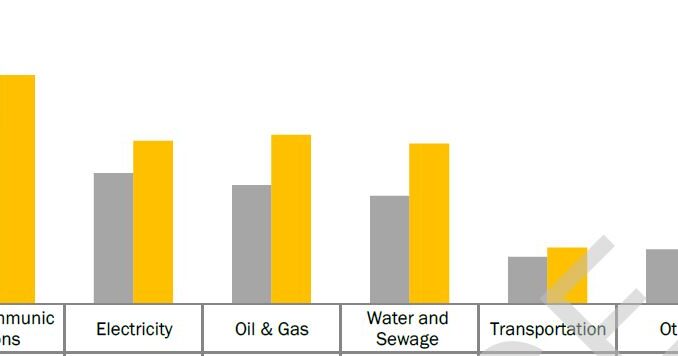
The analysis by Markets and Markets estimated that the global commercial utility locator market amounted to about US$ 5.17 billion in 2017 and growing by about 6% CAGR to reach US$ 7.50 billion by 2023. The analysis breaks the market down by detection technology including electromagnetic induction (EMI), ground penetrating radar (GPR), and others, hardware and services, verticals including oil and gas, electric power, transportation, water and wastewater, and telecom, and geography including North America (U.S., Canada, Mexico), Europe (U.K., France, Germany, and others), Asia Pacific (China, Japan, India and others) and the rest of the world.
The key firms included in the utility locator study included hardware providers Radiodetection (UK), Vivax-Metrotech (US), Guideline Geo (Sweden), Ridge Tool Company (US), Charles Machine Works (US), Sensors & Software (Canada), Leica Geosystem (Switzerland), and 3M (US) – only hardware from these manufacturers, but not software, is included in the market sizing – and major service providers USIC (US), multiVIEW (Canada), Ground Penetrating Radar Systems (GPRS) (US), On Target Utility Services (US), and Maverick Inspection (Canada).
The hardware equipment segment accounted for a larger share of the utility locator market in 2017. The hardware market has been segmented into electromagnetic field locators (EMI), ground penetrating radar (GPR), acoustic pipe locators, magnetic locators, and hydro or vacuum excavators. The electromagnetic field technique accounts for the largest share of the utility locator market in 2018 but GPR is projected to grow at the highest CAGR through 2023.
Geographically the largest utility locate market is North America, but Asia Pacific is projected to be the fasted growing over the next five years. In Asia Pacific Japan accounted for a major share of the utility locator market in 2017. Among verticals telecommunications accounted for the largest share of the overall utility locator market in 2017, but the market for utility locators used for the water and sewage is expected to grow at the highest CAGR over the next five years.
Caveat
I would emphasize that the M&M study is not an estimate of the total effort devoted by various organizations to identifying and locating underground utilities. In addition to not including software, there are other important segments that are not included. Utilities and telecoms are required in many jurisdictions to locate and mark their underground equipment before any construction project can proceed. They can do this by contracting the locate work out, in which case it is it included in the M&M estimate, or do it with their own staff, in which case it would not be included in the M&M estimate. Secondly, on any project that involves excavation the excavator, typically a construction contractor, will have to devote, often considerable, effort to exposing underground utilities. If this work is contracted out, for vacuum or hydraulic excavation, for example, this is included in the M&M estimate. If the contractor does it themselves, then it is not included in the M&M estimate. I suspect that the size of neither of these “non-commercial” efforts is insignificant.

Be the first to comment