
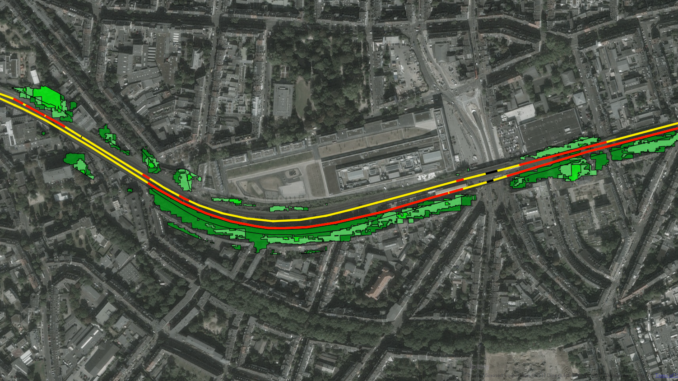
A recent startup LiveEO is focusing on the digitalization of energy and transportation network assets using satellite imagery. LiveEO uses current multi-band imagery including radar and hyperspectral data at various resolutions from earth observation satellites to provide services to railway, electric power and pipeline operators. The services include vegetation, third party encroachment, and ground distortion monitoring. I recently had the opportunity to chat with Sven Przywarra, co-founder of LiveEO.
Transmission line inspections are essential in ensuring grid reliability and resilience. They are generally performed by manned helicopters often together with a ground crew. There are serious safety issues when inspections are conducted by helicopter. Data may be collected with cameras and analyzed to detect a variety of conditions including corrosion, evidence of flash over, cracks in cross arms, and right-of-way issues such as vegetation encroachment. in North America annual inspections are mandated by NERC and are not optional. With over 200,000 miles of high-voltage transmission lines and 5.5 million miles of distribution lines in the United States, improving the efficiency and reducing the risk of inspections would have a major impact on the reliability of the power grid.
Vegetation is a significant source of outages for many utilities. In some regions from one quarter to one half of all outages can be ascribed to vegetation. Vegetation encroachment initiated the massive North American northeastern outage of 2003. It is so critical for utility operations that some utilities have a vice president responsible for vegetation management. It can be costly for utilities to identify areas of high risk vegetation encroachment. Previously I have blogged about an electric power utility in Brazil that used Airbus Pléiades satellite imagery combined with GIS data to identify high risk areas for vegetation encroachment in a power grid.
A recent startup LiveEO is focusing on the digitalization of energy and transportation network assets using satellite imagery. LiveEO analyzes current multi-band imagery including radar and hyperspectral data for vegetation, third party encroachment, and ground distortion monitoring. LiveEO uses multi-band imagery at various resolutions to distinguish vegetation and network assets, stereo imagery to estimate tree heights, difference detection to identify changes, and interferometry to detect subsidence and other ground distortions at the cm level. LiveEO is developing its own inhouse training data for machine learning algorithms.
For electric power utilities LiveEO applies machine learning multi-band satellite imagery from multiple sources to automatically identify areas of high risk for vegetation encroachment and fallover anywhere on the planet. The results of these analyses are available to clients over the web on handheld and other devices. This enables follow-up ground inspections of areas of high criticality to develop pruning and other response programs. LiveEO has applied this approach to transmission as well as distribution circuits. To demonstrate the wide ranging capability of their approach LiveEO is offering a demonstration of the analysis of 50 km of line anywhere in the world.
A number of companies, realizing that earth observation imagery in itself is of limited value, are not in the business of selling imagery, but the results of analytics applied to the imagery. I have blogged about a new company GHGSat who use their own nanosatellite to estimate emissions from industrial plants, leaks from flow and gathering infrastructure in natural gas fields, and even livestock. LiveEO is another example of a company who apply analytics to the huge amount of earth observation data to provide a valuable service that is safer and less expensive than the traditional approach to transmission and distribution line vegetation monitoring.

Be the first to comment