Gladys West: Getting It Right
“I’ve got to get this right.” It is a thought that surfaces again and again in geospatial work. A surveyor checks a control point one more time. A hydrographer reviews depth measurements knowing a small […]
New NOAA Project Looks to Map Critical Mineral Deposits on Seafloor Off American Samoa UK Space Agency Funds Two New Agricultural Initiatives NOAA Launches New Wildfire Monitoring Data Portal Planetary Intelligence Harnesses the Power of […]
If you work with geospatial data in Canada, you have likely heard the phrase “CSRS modernization” more often over the past few years. Sometimes it comes up in discussions about reference frames, sometimes in relation […]
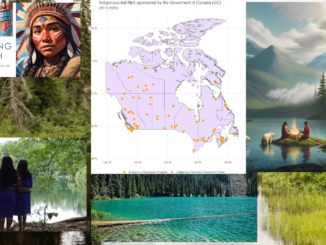
For decades, the conversation around conservation in Canada has been dominated by a “fortress” model—federal and provincial parks managed by central agencies. However, a landmark study released on January 6, 2026, by researchers at Concordia […]
Canada’s space sector entered 2025 without a new national strategy or a single defining announcement. It ends the year in a different place nonetheless. Across budgets, international commitments, Earth Observation investments, and industry assessments, space […]
PhotoSat Launches Regional Hyperspectral Targeting Tool for Mineral Exploration NordSpace’s Atlantic Spaceport Clears Environmental Review, Moves Toward Canada’s First Orbital Launch Site 3D Mapping Pilot Shows How Indoor GIS Could Improve Safety in Edmonton’s LRT […]
For most of the past decade, the geospatial industry has moved forward in predictable ways. Better sensors, more satellites, faster processing, and incremental improvements stacked on top of existing workflows. 2025 doesn’t fit that pattern. […]
A new class of artificial intelligence is changing how we understand the planet. Known as foundation models, these systems are trained on massive, planetary-scale datasets drawn from satellites, sensors, and geospatial platforms, allowing scientists and […]