
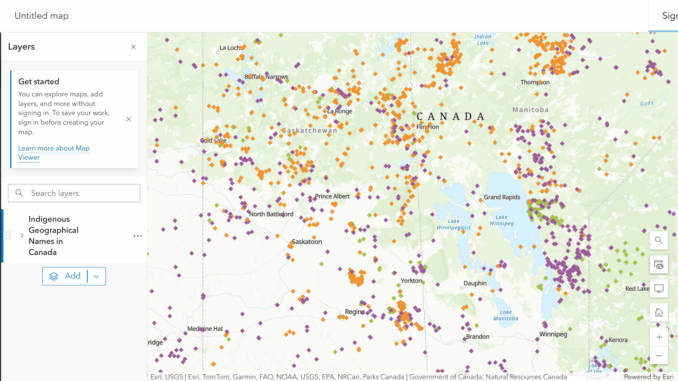
The names that we give our communities and the landscapes that surround us are important to our sense of self, often representing a collective history and anchoring us within the wider world. When European colonists appeared in North America, they dispossessed indigenous communities of their land and ways of life, often changing traditional indigenous names to match what they knew from Europe. As part of the ongoing process of reconciliation, many indigenous communities are reclaiming the names of land, water and settlements which previously carried European names. Mapping is a powerful tool to help with this end.
As previously reported by GoGeomatics, Esri Canada has updated their Living Atlas of the World to include a range of Canadian indigenous datasets. These web map layers are filled with a range of rich data, including traditional place names, treaty area boundaries and resource data.
To better understand the Living Atlas and learn more about the need for indigenous datasets, GoGeomatics reached out to Esri Canada for comment. We received a written response from Kelsey Davis, Program Manager, Indigenous Communities, with contribution from Malena McCrossan, the Living Atlas Curator.
Interview follows:
Can you explain the Living Atlas and describe the process for including data with the service?
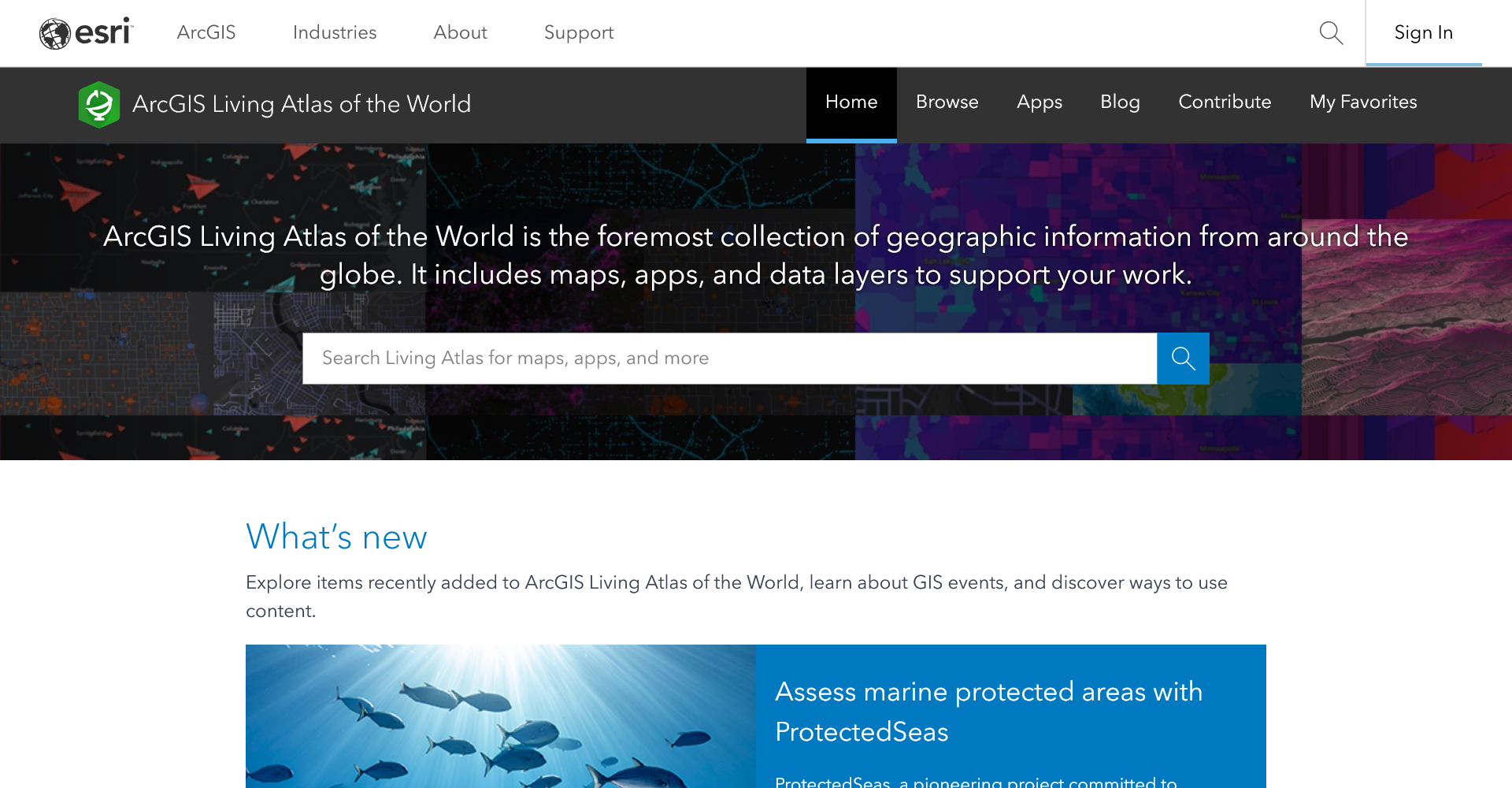
The Living Atlas of the World is a curated collection of authoritative, ready-to-use geographic information available through ArcGIS Online. It includes maps, apps and data layers from Esri and the GIS community. Esri Canada works to curate content specifically for Canada, including the addition of national datasets and the creation of essential wildfire and weather datasets.
To include data in the Living Atlas, contributors must ensure their content is hosted publicly in ArcGIS Online and well documented. The Living Atlas Nomination Guide offers tips and best practices to help prepare your item for nomination. To nominate your item, navigate to the Living Atlas website and use the “Nominate your Content” feature under the “Contribute” tab.
Items undergo a curation process where Esri evaluates the source, quality and documentation of the data. Once accepted, the item receives a Living Atlas badge and remains under the contributor’s ownership and maintenance.
Why did Esri Canada decide to include data about Indigenous names, agreements, and communities in the Living Atlas?
Esri Canada recognizes the importance of Indigenous data sovereignty, cultural preservation, and reconciliation. Including datasets such as Indigenous Geographical Names, Tribal Council Locations and Treaty Agreements helps:
- Amplify Indigenous voices and perspectives
- Support community planning, governance and education
- Provide accessible tools for both Indigenous and non-Indigenous users to engage with culturally relevant data
This initiative aligns with Esri Canada’s broader commitment to reconciliation and supporting Indigenous communities through geospatial empowerment.
Can you provide an example of an Indigenous or non-Indigenous group/individual using indigenous datasets from the Living Atlas?
The Government Operations Centre (GOC) team has developed emergency management web mapping applications to support preparedness for a range of hazard events at the national level. They have leveraged the Living Atlas by including Indigenous datasets in their web maps.
This data appears to be meaningful for many Indigenous communities. Do you think the curation of indigenous datasets is an important step towards reconciliation?
Absolutely. Curating and sharing Indigenous datasets in the Living Atlas is a meaningful step toward reconciliation. It:
- Promotes visibility and respect for Indigenous cultures and histories
- Enables informed decision making and storytelling by Indigenous communities
- Encourages collaboration and understanding across jurisdictions
By embedding Indigenous knowledge into national geospatial frameworks, Esri Canada helps foster a more inclusive and equitable digital landscape.
Are there examples of other jurisdictions that have created similar datasets for their Indigenous communities?
Yes. Several jurisdictions have developed Indigenous-focused datasets:
- New Brunswick has mapped Mi’kmaq place names to restore traditional nomenclature.
- Statistics Canada provides datasets on Indigenous infrastructure, energy needs, and community demographics.
- Globally, countries like Australia and New Zealand have integrated Indigenous place names and cultural layers into their national mapping systems.
These efforts reflect a growing recognition of Indigenous data as essential to national identity and governance.



Be the first to comment