
From dashboards to disaster, a sweeping rollback of federal climate data is leaving Americans unprepared
On June 24, the US administration shut down Climate.gov — a U.S. government website dedicated to public education in climate science. For over a decade, the website had served as a trusted resource for climate literacy, featuring tools like NOAA’s Global Climate Dashboard, seasonal outlooks, teaching materials, and data visualizations. The entire team that built and maintained it had already been dismissed in May. The website now redirects to NOAA’s homepage, leaving the public to navigate scattered archives rather than a dedicated, curated platform.
A few days later, GlobalChange.gov — the official portal of the U.S. Global Change Research Program — was also taken offline. ABC News quoted a NASA spokesperson, the removal included all five editions of the National Climate Assessment, as well as decades of federally funded research documenting how human-driven climate change is reshaping the United States.
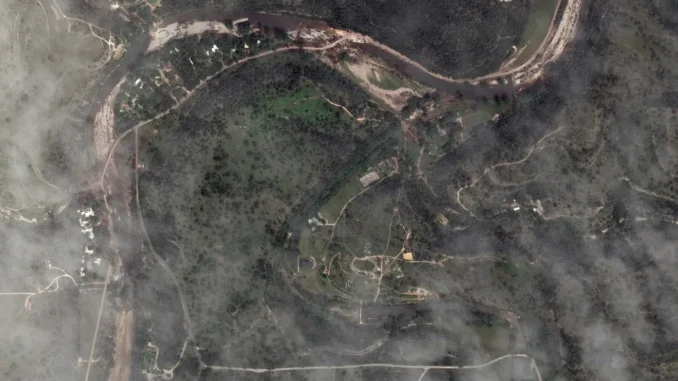
Then, on July 5, catastrophic flash floods swept through central Texas — devastating communities, killing over a hundred people, destroying homes and infrastructure, and overwhelming emergency responders. The timing is not incidental. It underscores what happens when public science is stripped away just as the consequences of climate inaction grow more severe.
Climate.gov didn’t prevent disasters. But it helped people understand them. It translated complex data into public insight, offering tools and information used by farmers, teachers, journalists, planners, and decision-makers across the country. Its absence is more than symbolic — it’s operational.
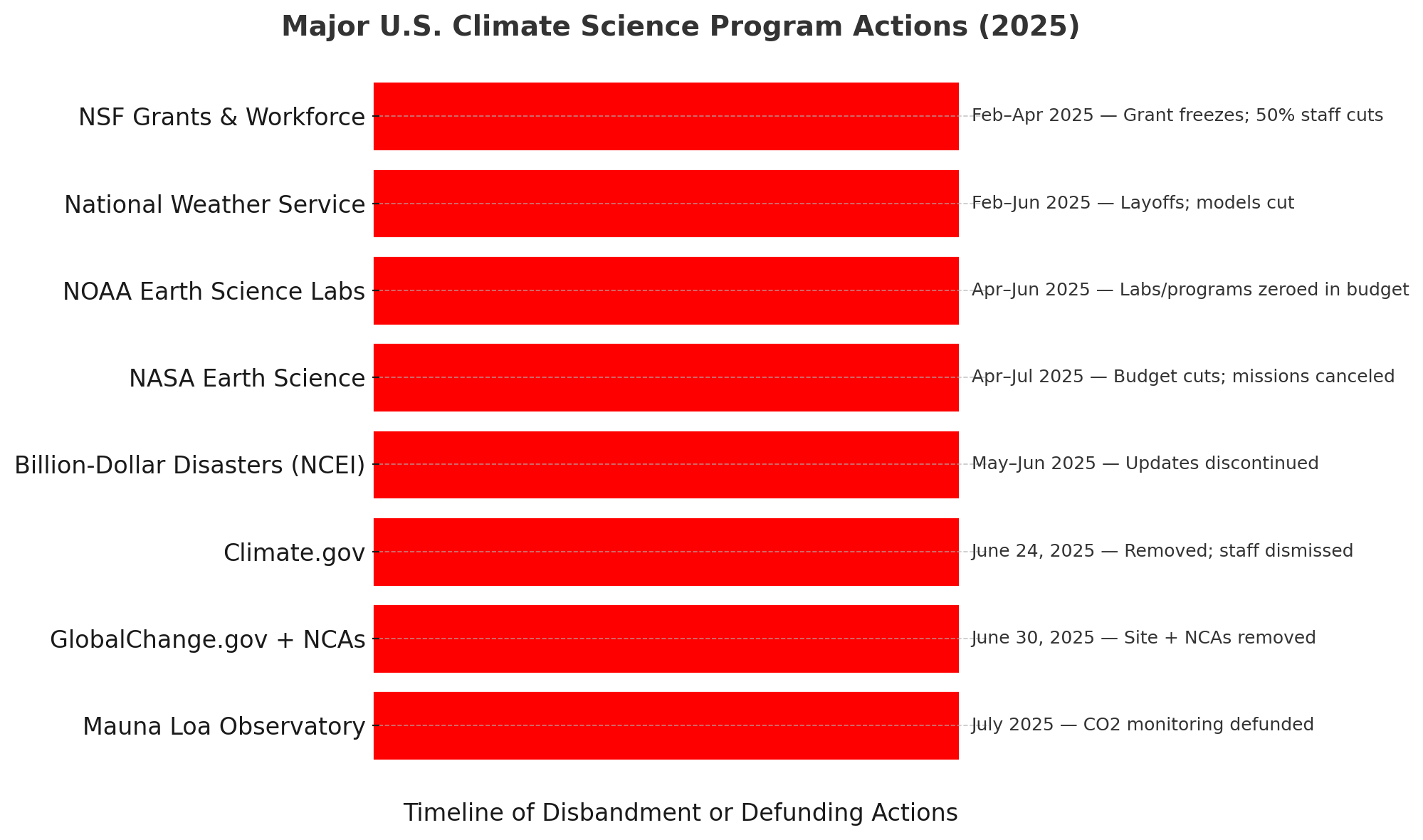
And these websites are just a handful in a long list. In recent months, a sweeping rollback of U.S. climate science infrastructure has seen the removal, defunding, or dismantling of key programs, datasets, and agencies — from the National Climate Assessment to Mauna Loa’s CO₂ monitoring and major NASA and NOAA climate initiatives.
A Site Built to Serve the Public
Since 2010, Climate.gov helped bridge the gap between federal climate research and the real-world choices communities face. Its maps, dashboards, and feature stories explained long-term trends and seasonal conditions. A teacher could use its lesson plans to explain climate variability. A city planner could reference its precipitation outlooks for infrastructure design. A farmer could use seasonal forecasts to plan planting and irrigation schedules. Its blogs were a touchstone for those following shifting weather impacts.
It tracked sea-level rise and El Niño patterns. It translated global models into regional forecasts. It offered real-time dashboards that showed how the climate was changing—and what that meant for communities on the ground.
It was climate science made clear. Made usable. Made public. And it consistently ranked among NOAA’s most visited and cited public resources.
Now it’s gone! Not because it failed, but because it succeeded too well in telling the truth.
A ‘Gold Standard’ That Muzzles Public Knowledge
The official reason for the shutdown? Compliance with Executive Order 14303, signed in May and titled — without irony — “Restoring Gold Standard Science.”
The order sets new federal requirements for how agencies present scientific information to the public, emphasizing methodological transparency, alignment with approved messaging, and consistency in tone and framing.
In practice, it grants political appointees broad authority to determine whether science communications meet those standards. Under this framework, Climate.gov was deemed noncompliant — not because it was inaccurate, but because it was accessible, widely used, and politically inconvenient.
Because science — especially climate science — is increasingly being framed as partisan. Because facts are losing to fear.
Science That Vanishes When It’s Inconvenient
The timing couldn’t be more symbolic. In Texas, entire neighborhoods were submerged in what meteorologists called a “historic flooding event.” Roads collapsed. People died. Emergency responders were overwhelmed.
And Texas is not an isolated incident. The frequency and intensity of such disasters are only increasing.
Between 2015 and 2024, the United States experienced 190 separate billion-dollar disasters, resulting in more than $1.4 trillion in damages, according to NOAA’s National Centers for Environmental Information. The frequency and cost of these events have surged over the past decade.
Incidentally, the NCEI page also now carries another notice: the agency will no longer update the Billion-Dollar Weather and Climate Disasters product — one of the most widely cited tools for tracking the financial toll of climate extremes.

The historical data remains archived, but forward-looking updates are ending. The official reason points to “evolving priorities, statutory mandates, and staffing changes.” The effect is the same: one fewer window through which the public can see, understand, and prepare for a future defined by rising risk.
What platforms like Climate.gov or others offered wasn’t just data. It was context. It helped people understand that these are not freak accidents. They are symptoms of a shifting climate, grounded in decades of measurement, modeling, and observation.
You Can Shut Down the Websites, Not the Crisis
You just make it harder to see.
The science behind Climate.gov remains sound. The Earth is still warming. Oceans are still rising. But when platforms that make that science visible are shut down, we all lose the ability to act on it.
The floodwaters in Texas were not a surprise. The conditions that led to them — unusual heat, moisture-rich air masses, and shifting seasonal baselines — are all part of broader climate patterns. Explaining those patterns used to be part of the role of Climate.gov or every other climate watch initiative that has been defunded.
When communication is treated as a liability, public trust erodes. And with it, our ability to prepare for what lies ahead.


Be the first to comment