
- Meet Biomass, the Satellite Measuring the Carbon Content of Rainforests
- Google and AI – Geospatial Reasoning
- Mapping Seagrass Along the Italian Coast with Airborne Lidar Bathymetry
- Idea to Capture Vanguard-1, a Satellite from 1958
- Senegal Launches National Geoportal
- A Team from IIT Madras Builds New Indoor Mapping Tech
Meet Biomass, the Satellite Measuring the Carbon Content of Rainforests
The European Space Agency (ESA) has been preparing for the launch of their new satellite Biomass. Utilizing a P-Band synthetic aperture radar, this satellite will measure biomass and other characteristics of rainforests to help estimate their stored level of carbon. With this information, researchers can gain a better understanding of how much carbon is being lost to the atmosphere from rainforests. This research is important as deforestation and environmental degradation are diminishing the ability of rainforests to sequester carbon. Biomass is expected to be launched April 29th.
Learn more here:

Google and AI – Geospatial Reasoning
Google has worked with geospatial data for a long time and has continued to develop new applications for its use. One major development in this area is Google’s application of artificial intelligence into geospatial processes. In October, Google implemented its AI Gemini into Google Earth, which has the capability to perform basic GIS functions.
Google has recently introduced a framework called Geospatial Reasoning, which builds upon the power of generative AI and Google’s geospatial foundation models. Geospatial Reasoning integrates data from a wide variety of sources, allowing developers and researchers to perform spatial analysis and remote sensing tasks. The goal is to develop insight into areas such as urban planning and disaster management.
Learn more here:
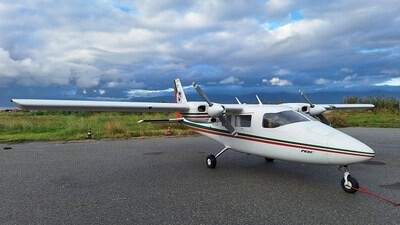
Mapping Seagrass Along the Italian Coast with Airborne Lidar Bathymetry
Italy’s Marine Ecosystem Restoration (MER) project is a massive marine conservation initiative which has dedicated €400 million towards preservation of marine habitats around Italy. As part of MER, the firms Fugro and CGA SpA have partnered to produce high quality airborne lidar bathymetry (ALB) data of the Italy’s coastline.
Traditionally, bathymetric measurements are carried out through acoustic means, requiring a ship and significant funding. By using ALB, aircraft operators can measure marine environments at a modest depth, which is useful for shallow areas around coastlines. The benefit of ALB is that it has a lower impact on the environment than acoustic measurements and can be completed relatively quickly. These coastline areas are very important, as many of them contain seagrass meadows, a crucial component of marine ecosystems. Seagrass meadows are under significant pressure from industrial and agricultural pollution.
Learn more here:
Idea to Capture Vanguard-1, a Satellite from 1958
Engineers from the consulting firm Booz Allen Hamilton have recently suggested that the satellite Vanguard-1 should be brought back to Earth for examination. Having orbited the Earth since 1958, Vanguard-1 is currently the oldest human-made object in space. Due to it’s small and aerodynamic design, it has remained in-tact.
If the probe can be brought back to Earth, it may provide useful information, such as the impacts of space debris on a satellite over such a long period of time and the effects of radiation and temperature fluctuations on electronics. The collection of Vanguard-1 would also provide a useful opportunity to practice the retrieval of objects in orbit, which will be useful for collecting space “junk” in the future.
Learn more here:

Senegal Launches National Geoportal
On April 8th, Senegal launched its National Geoportal, developed as part of the nation’s National Geomatics Plan and SEN Spatial Project. The goal of the National Geoportal is to assist in the improvement of both quality and governance of spatial data within Senegal. The goal of this plan is to use spatial data to drive solutions in areas such as agriculture and food security, environmental issues, social services and infrastructure development.
Senegal’s National Geoportal aligns with other government initiatives including the country’s Technological Green Deal and the launching of Senegal’s first satellite GAINDESAT-1, for use in Earth observation and territorial management.
Learn more here:
A Team from IIT Madras Builds New Indoor Mapping Tech
A team from the Indian Institute of Technology (IIT) Madras has recently designed a new, wearable device to assist with indoor mapping during emergencies. Known as UbiqMap, this device uses a method called Radio Tomographic Imaging (RTI), which allows a user to create indoor maps as they travel through a building and can ascertain information such as wall composition.
Along with other disaster response techniques, UbiqMap can help to create an enhanced “picture” of an indoor recovery mission. Currently, a patent for UbiqMap has been submitted as the team awaits peer review of their work.
Learn more here:



Be the first to comment