
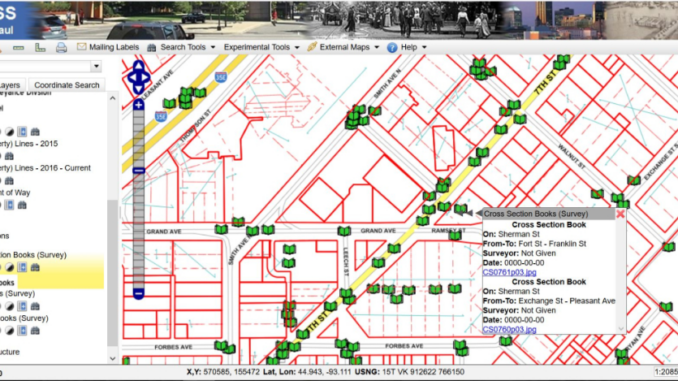
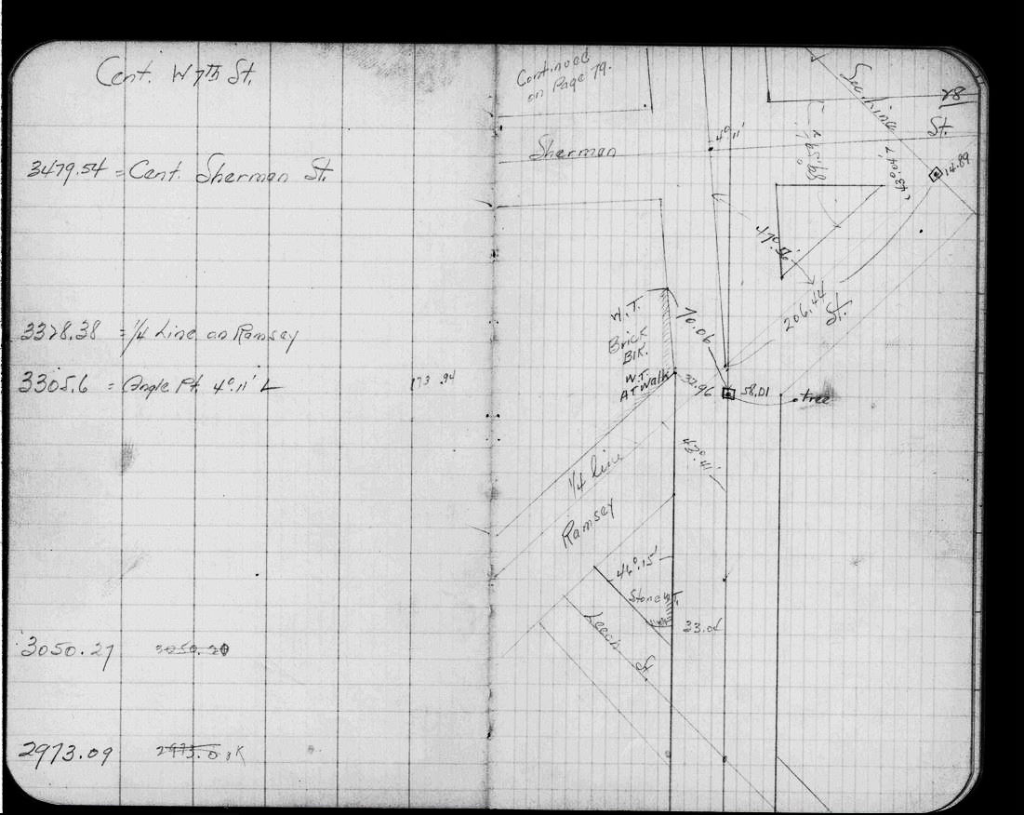
At GITA 2018 in Phoenix, Bob Basques, GIS Systems Developer at the City of St Paul, described a system called COMPASS he and his team have developed that provides a shared, easy to use tool that allows city employees and the public access to all of the City’s spatial and associated data including, for example, scans of surveyors’ notebooks, 2.2 million street level photos, and permitting and licensing information from 200 different applications. Based completely on open source components the system is compact and efficient enough to run on a Raspberry Pi.
One of the problems that hampers efficient operations at municipalities is accessing geospatial data originating from multiple sources such as infrastructure maintenance, planning and zoning, property ownership, engineering, permitting, licensing and code enforcement. Spatial data is generated by CAD drafters, GIS users, surveyors and even users with smart phone apps. Imagery data can come from a variety of sources including earth observation satellites, aerial overflights, street photography, and drones. This data is constantly changing which means that any process that involves making copies such as converting it to a common format creates a bigger problem than it solves.
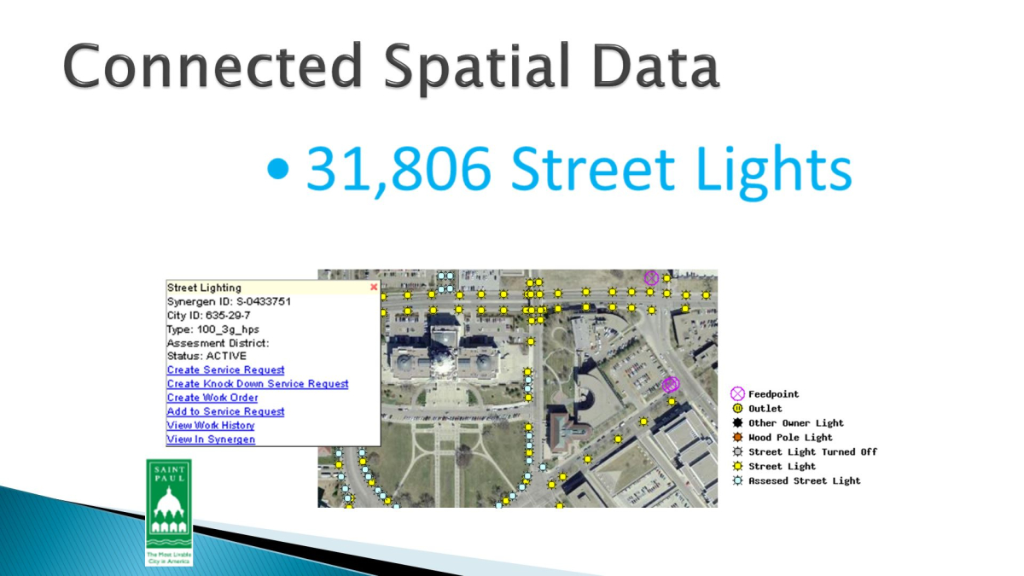
The City of Saint Paul is responsible for infrastructure maintenance for all of the infrastructure within the public right-of-way. It is also responsible for maintaining parcel information linking and addressing assignment. St Paul is only 56 square miles, but it is densely developed and there is a lot of infrastructure and the associated regulations to manage. In addition St Paul is part of the metro area of the Twin Cities and users of St Paul data often need access to data outside of St Paul.
The application is intended to improve the efficiency of common tasks including infrastructure maintenance management, planning and zoning, property ownership, engineering, permitting. licensing and code enforcement. To do this the system accesses multiple disparate data sources from different data custodians including Public Works, Safety and Inspections, Planning and Economic Development, Parks & Recreation, Office of Technology, Fire, Police, Real Estate, and District Councils. The public has access to 73 layers of data through OGC web standard interfaces. The tool, called GeoMoose, is an open source project (MIT license) on OSGeo and uses only open source components. There are quite a few governmental agencies around the U.S participating in the GeoMoose project.
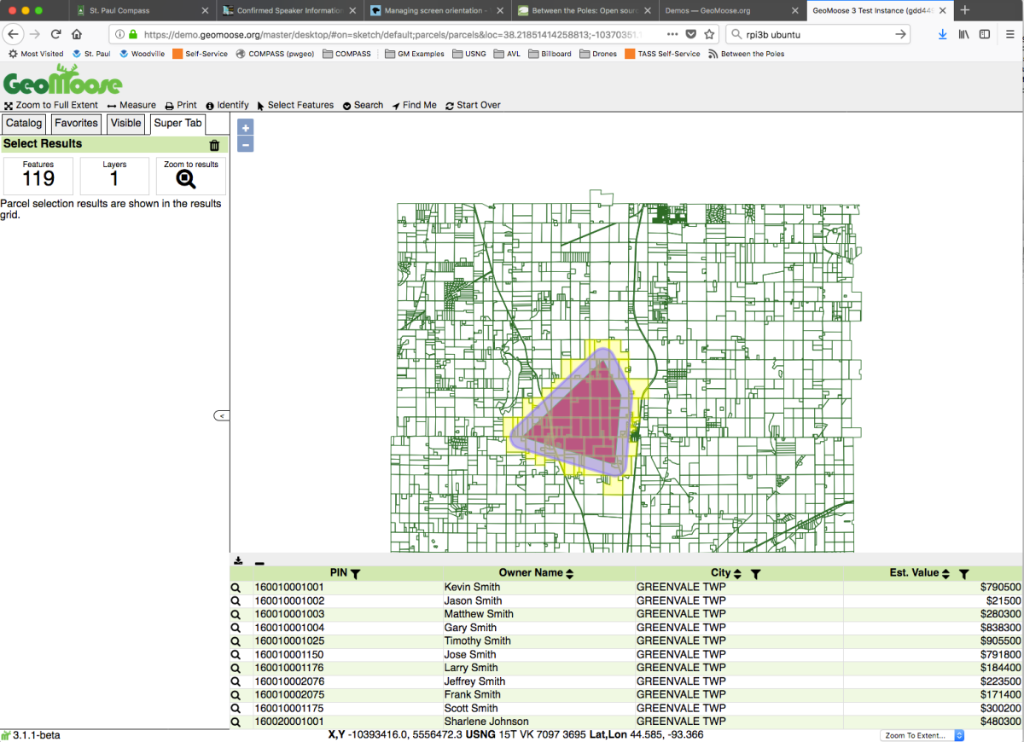
The application is extremely compact and light weight – Bob demonstrated it running an a Raspberry Pi with a 64 GB drive (just about any size MicroSD card will work) – which means that users working in areas with restricted wireless can still access important data. GeoMoose runs on Linux and Windoes and can be accessed via Wifi from Windows, Linux, Android, iOS and Mac OS – actually any device with Wifi and a browser including a USB stick. The core of GeoMoose is comprised of HTML and Javascript code. It can access data stored in the file system as well as from OGC WMS/WFS sites over the internet. GeoMoose included an editor that allows users to create geometric objects such as polygons. A typical application would be to define a polygon representing a new project, put a buffer around it and find all the parcels that would be impacted by the project.
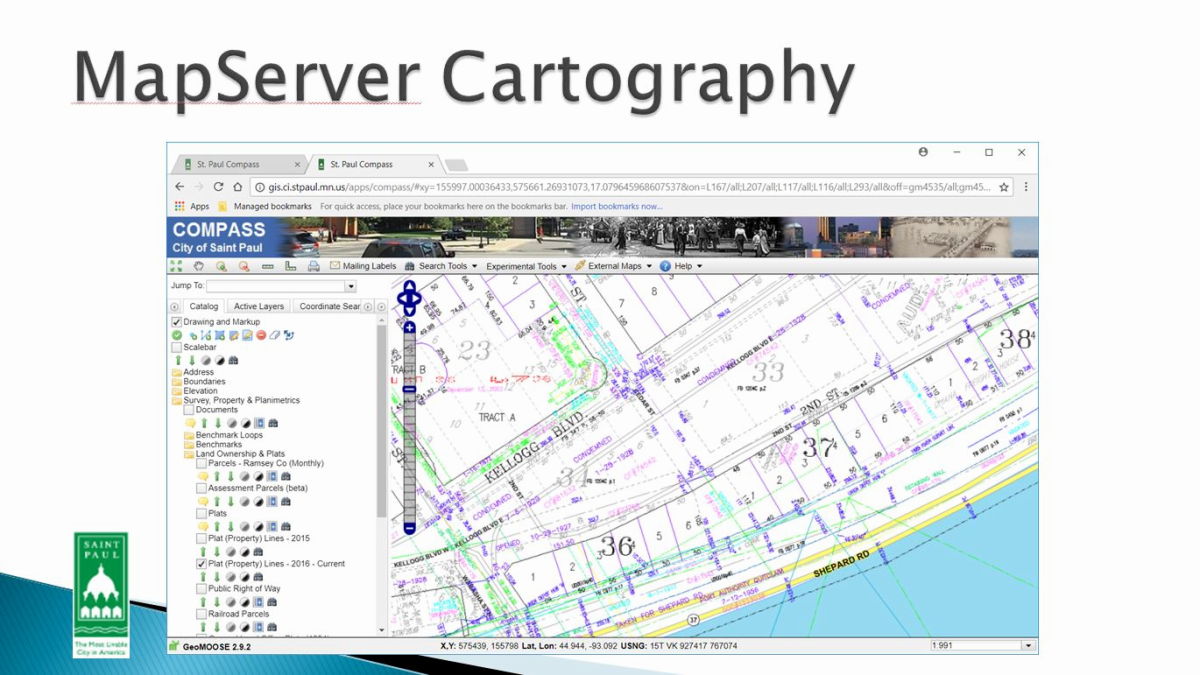 The system handles many different data types including 305 layers ( a new layer is added every week or two), 32 live database connections, 39 imagery layers, and 31 infrastructure layers. Besides Public Works users, users from more than 40 other organizations access the system. The system is an OSGeo project and is built on open source components including OpenLayers and MapServer, and can be integrated with PostgreSQL/PostGIS, Webdav, svn and Apache.
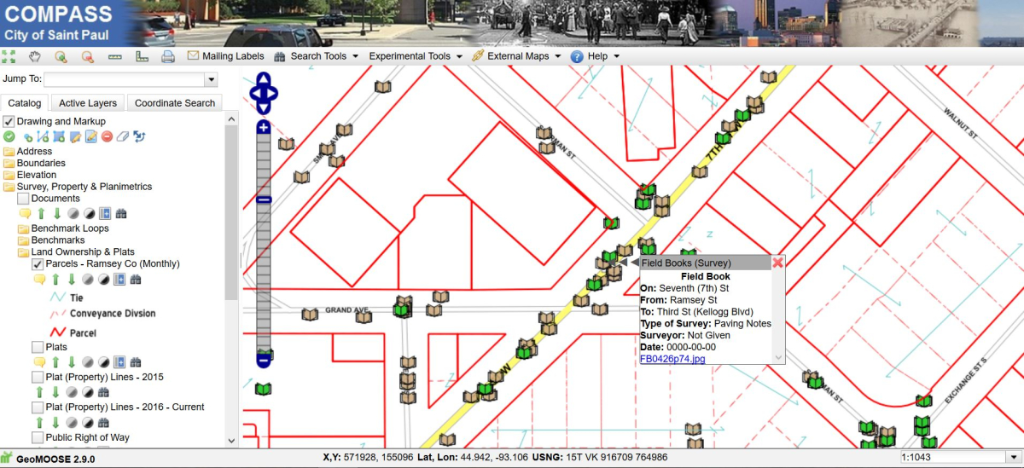
COMPASS exposes data to the world via OGC standard tools. Most of the data in the COMPASS system of tools is available as a WMS service. Selected datasets are also available as WFS layers. Some layers are protected for security or contractual reasons. GeoMoose 3.0, which was released in August of last year is mobile friendly and supports modern Javascript frameworks such as React.
The system has become widely used and trusted. It gets about 50,000 hits per week not only within Public Works but also by other users inside and outside of the city government. It has eased many previously labour intensive processes. Because more users are accessing their data, custodians of the data are taking greater responsibility for data which has led to an overall improvement in data quality and timeliness. Open source has allowed customization for specific users that would not have been possible without access to the underlying code. For example, it has made it possible to create specialized visualizations and reports, connecting to various proprietary databases, mixing data sources on output and building custom lookup processes.

Be the first to comment