
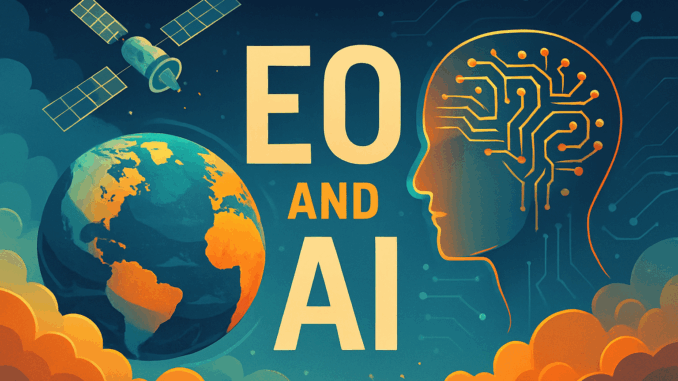
Real-Time Spatial AI
The integration of IoT devices, drones, and real-time satellite imagery is revolutionizing geospatial decision-making. AI-powered real-time spatial analysis is becoming crucial for applications such as autonomous vehicles and smart cities, enabling more efficient and accurate responses to dynamic environments. In Canada, this technology is being utilized to enhance urban infrastructure and improve traffic management in major cities like Toronto and Vancouver.
AI-Powered 3D Mapping
Organizations in Canada are increasingly leveraging AI to create high-resolution, 3D interactive maps with remarkable speed and precision. These maps are vital for urban planning, disaster response, and environmental monitoring, providing detailed insights that were previously unattainable. Canadian cities are using these maps to plan sustainable development and respond effectively to natural disasters.
Generative AI
Generative AI is opening new frontiers in geospatial technology. By creating detailed geospatial datasets and simulations, generative AI enhances our ability to predict and respond to various scenarios, offering unprecedented opportunities for innovation and problem-solving. Canadian researchers are at the forefront of developing these technologies, contributing significantly to global advancements.
Enhanced Collaboration
Collaboration platforms that bring together researchers, industry leaders, and emerging innovators are accelerating the development and commercialization of AI-powered geospatial solutions. In Canada, initiatives like GeoIgnite foster the exchange of ideas and expertise, driving progress in the field. These collaborative efforts are crucial for addressing national and global challenges through geospatial technology.
Collaboration in geospatial technology involves several key components:
- Integrated Geospatial Infrastructure: Successful collaboration requires a holistic approach that includes leadership, vision, data stewardship, and a representative organizational structure. This integrated infrastructure supports the seamless sharing of geospatial data and resources across different sectors and regions.
- Partnerships and Agreements: Various types of collaborations, such as partnerships, Memorandums of Understanding (MoUs), and tech transfers, play a crucial role in making geospatial innovation accessible and scalable. These agreements facilitate the sharing of knowledge, technology, and resources, enabling more effective and efficient solutions.
- Interoperability: Ensuring that geospatial products and systems work seamlessly across different platforms is essential for effective collaboration. This interoperability allows for the uninterrupted flow of geospatial information and data, which is critical for real-time decision-making and innovation.
- Cross-Sector Collaboration: Geospatial technology’s vast applicability across different domains encourages collaboration between government, industry, and academia. This cross-sector collaboration drives innovation and helps address complex challenges by leveraging diverse expertise and perspectives.
Integration with Large Language Models (LLMs)
The fusion of language understanding and spatial computation is making geospatial analysis more intuitive and accessible. AI agents powered by LLMs can assist in planning workflows, interpreting satellite imagery, and suggesting optimal spatial models, simplifying complex geospatial tasks. Organizations are integrating these technologies to enhance research and operational efficiency.
AI in Geospatial Intelligence
AI is transforming geospatial intelligence by enabling analysts to quickly identify solutions to previously unsolvable problems. This transformation requires organizational changes to support the tighter integration of AI and geospatial workflows, ensuring that the full potential of AI is realized. Canadian agencies are adopting these changes to improve national security and environmental monitoring.
Key Takeaways
These trends underscore the dynamic evolution of geospatial technology as it converges with AI, promising a future of enhanced capabilities and collaborative innovation. The GeoIgnite 2025 conference has provided a glimpse into this exciting future, highlighting Canada’s pivotal role in advancing geospatial and AI technologies.


Be the first to comment