
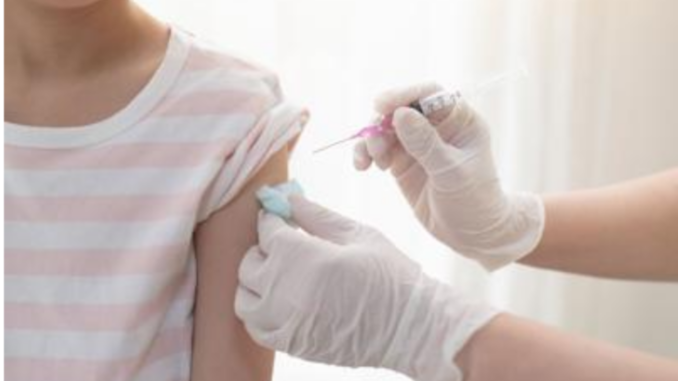
One fall afternoon, while sharing tea with my grandmother, she remarked, “They’re talking about measles again. I thought we got rid of that.” She recalled how the introduction of the measles vaccine in 1963 led to a significant decline in cases (National Collaborating Centre for Infectious Diseases [NCCID], n.d.).
The main reason measles is resurging is a drop in herd immunity, caused by falling vaccination rates, misinformation, international travel, and limited healthcare access (Boutilier, 2025). During the COVID-19 pandemic, many children missed vaccinations due to clinic closures and school shutdowns (Government of Canada, 2025). As a result, 73% of measles cases in Ontario are now among unvaccinated children and teens (Public Health Ontario, 2025).
Who Is Unvaccinated?
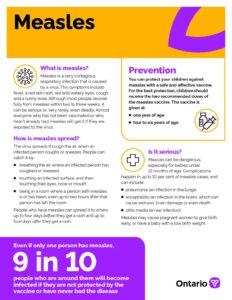
By November 2025, 89% of measles cases in Canada were in unvaccinated individuals, with 45% aged 5–17 (Public Health Agency of Canada [PHAC], 2025). In Ontario, vaccination rates for seven-year-olds dropped from 86% in 2019 to 70% in 2023, largely due to COVID-19 disruptions (Ontario Chief Medical Officer of Health, 2024).
Why Ontario’s Immunization System Needs an Update
Ontario’s immunization system is outdated. Vaccination data is scattered across multiple platforms, making it difficult to get a real-time, accurate view of coverage. This slows response times when vaccination rates drop or outbreaks occur (The Trillium, 2024). Additionally, the system doesn’t link vaccination data to specific areas, such as neighborhoods or postal codes, making it hard to identify where gaps are most severe (Public Health Ontario, 2024).
The lack of coordination between health services leads to inefficiencies. During the recent measles outbreak, gaps in coverage contributed to the spread of the disease (Public Health Ontario, 2025). Experts recommend upgrading the immunization registry to allow real-time data sharing among health agencies, schools, and healthcare providers. This would provide a clearer picture of vaccination gaps and help target interventions more effectively.
How GIS can help build a Fairer Vaccine System for All
GIS tools can help identify areas with limited access to vaccines, such as rural neighborhoods with poor transportation options or clinics with restrictive hours. By mapping these gaps, GIS can help prioritize interventions like mobile vaccination units or school-based clinics. This would improve communication between healthcare providers, schools, and public health teams, leading to faster, more effective responses.
For example, rural communities often struggle with access to healthcare. GIS can pinpoint these areas and help public health teams deploy targeted interventions to increase vaccine coverage. A centralized system that connects vaccination data to geographic information would allow for focused interventions. Public Health Ontario suggests using real-time tracking to identify areas with low vaccine coverage, enabling quicker responses like mobile clinics or school vaccination programs (Ontario Immunization Advisory Committee [OIAC], 2024).
Conclusion
The resurgence of measles in Ontario underscores the need for a modernized immunization system. By upgrading the registry and using GIS tools to track vaccination gaps, we can respond more quickly to outbreaks. These changes are crucial for improving public health and ensuring equitable access to vaccines for all communities.
References
Boutilier, A. (2025, March 27). Measles outbreak expert: Declining vaccination rates and the return of measles in Canada. Dalhousie University News. https://www.dal.ca/news/2025/03/27/measles-outbreak-expert.html
Canadian Immunization Registries and Coverage Network (CIRC). (2025). Functional standards for immunization registries. https://www.canada.ca/en/public-health/services/immunization-vaccines/vaccination-coverage/functional-standards-recommendations-canadian-immunization-registries-coverage-network.html
Government of Canada. (2025). Impact of COVID-19 on childhood immunizations in Canada. https://impact.canada.ca/en/reports/COVID-19/childhood-immunizations
ICES. (2025). Data privacy. https://www.ices.on.ca/data-privacy
National Collaborating Centre for Infectious Diseases. (n.d.). Measles: Canadian elimination status. https://nccid.ca/debrief/measles/
Ontario Chief Medical Officer of Health. (2024). Annual report 2024. https://www.ontario.ca/page/chief-medical-officer-health-2024-annual-report
Ontario Immunization Advisory Committee. (2024). Recommendations for a modern immunization registry.
Public Health Agency of Canada. (2025). Measles and Rubella Weekly Monitoring Report. https://www.canada.ca/en/public-health/services/diseases/measles/weekly-monitoring.html
Public Health Ontario. (2024). Strategies to improve vaccine coverage. https://www.publichealthontario.ca/en/Data-and-Analysis/Commonly-Used-Products/Immunization-Tool
Public Health Ontario. (2025). Measles epidemiology report, November 27, 2025. https://www.publichealthontario.ca/en/Diseases-and-Conditions/Infectious-Diseases/Vaccine-Preventable-Diseases/Measles/EPI
The Trillium. (2024). The case for a centralized immunization registry in Ontario


Be the first to comment