
Just as technology continues to evolve at lightning speed, so too does the movement of people across the globe. In today’s hyper-connected world, the skies have become highways, and airports, global crossroads.
Air travel remains the safest, fastest, and most structured means of transportation—and with passenger numbers projected to rise steadily each year, the aviation industry is under mounting pressure to keep up.
To meet the demands of this ever-growing influx, airports must not only expand their physical infrastructure but also embrace smarter, more advanced technologies. Enhancing safety, improving efficiency, and delivering a seamless travel experience are no longer optional—they’re essential. And that’s where innovations like Lidar (Light Detection and Ranging) come into play.
Airports around the world are eager to embrace game-changing solutions that can revolutionize the way they operate—and Lidar technology stands at the forefront of that transformation.
Unveiling the possibilities of usage of Lidar on airports infrastructure, management and better planning , real- time monitoring and rapid emergency response, let’s dive into how Lidar is reshaping the modern airport — turning complexity into clarity, and challenges into opportunities.
Why Lidar? Does it bring new possibilities?
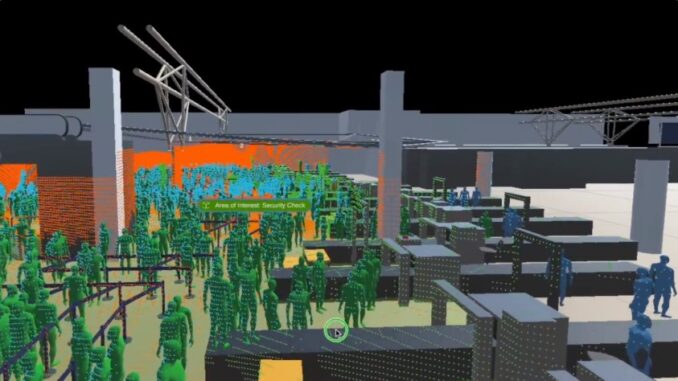
- Airports already utilize an extensive network of cameras and sensors, which perform effectively in many scenarios. However, the integration of 3D Lidar technology offers a significant advancement. By emitting and measuring multiple light pulses, Lidar systems generate a dense “point cloud” — a highly detailed 3D representation of the environment.
- This technology provides exceptional precision, with an accuracy margin of just a few centimeters, regardless of the distance between the sensor and the target.
- In complex, high-pressure airport environments where safety, precision, and situational awareness are critical, the enhanced capabilities of Lidar can greatly improve operational efficiency and threat detection.
- Lidar technology can generate a digital elevation model (DEM) of the airport’s surrounding landscape. This feature would aid in the planning and management of runways, taxiways, and the overall airport area.
- When it comes to indoor applications, Lidar offers a distinct advantage in preserving passenger privacy. Operating continuously around the clock, Lidar systems collect spatial data without capturing any personally identifiable information.
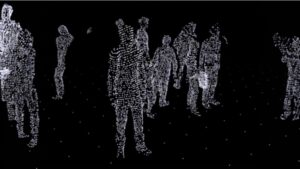
- Unlike traditional cameras, Lidar does not record biometric details, facial features, or skin tone. This makes it an ideal solution for enhancing security and situational awareness in sensitive environments — such as airport terminals — while fully respecting individual privacy.
- By monitoring crowd movement and foot traffic in critical areas—such as check-in counters, security checkpoints, and boarding gates — Lidar systems provide real-time insights into passenger flow. This data enables airports to dynamically allocate staff and resources based on current demand, improving operational efficiency, reducing wait times, and enhancing the overall passenger experience.
- Lidar systems contribute significantly to situational awareness by continuously collecting and transmitting data to central hubs. This keeps airport staff updated with real-time information across various operational zones, including runways, parking garages, boarding gates, and loading or unloading areas.
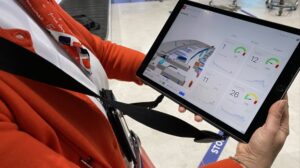
- Additionally, monitoring traffic in parking structures and on tarmacs allows for better management of vehicle flow, helping to reduce congestion around the airport perimeter and streamline logistics.
- Thanks to its long range and high accuracy, Lidar remains effective even in challenging outdoor conditions such as rain, snow, lightning, bird strikes, and strong winds — making it a robust solution for both indoor and outdoor airport environments.
A Clear Path Forward
As the aviation industry soars into the future, Lidar technology is quickly becoming one of its most powerful co-pilots. When paired with the capabilities of Artificial Intelligence (AI) and Machine Learning (ML), Lidar transforms from a data collection tool into a dynamic engine for smarter, safer, and more sustainable airport operations.
Its ability to “see” the airport environment in three dimensions — day or night, rain or shine — makes it indispensable in the complex choreography of modern aviation.
In a world where airports must do more with less — handle more flights, move more passengers, and uphold the highest safety standards — Lidar provides a clear path forward.



Be the first to comment